

or call 020 7404 3400

or call 020 7404 3400
Or call 020 7404 3400
For SEND pupils, the environment around them can have just as much impact as the teaching itself. Lighting, noise, layout, colour and visual clarity all influence how safe, regulated and confident a child feels during the day.
Across the UK, around 1.7 million pupils have special educational needs. And just like any learner, they thrive when their surroundings are predictable, welcoming and supportive.
That’s where thoughtful design makes a real difference.
At Promote Your School, we create bespoke Wall Art that helps schools shape spaces with purpose. This includes sensory rooms and quiet corners, busy communal areas and corridors. Our designs don’t just brighten walls; they help pupils regulate emotions, build independence and feel a sense of belonging.
Because when the environment works for students, everything else becomes easier too.
Here’s how intentional Wall Art can support SEND pupils throughout your school.
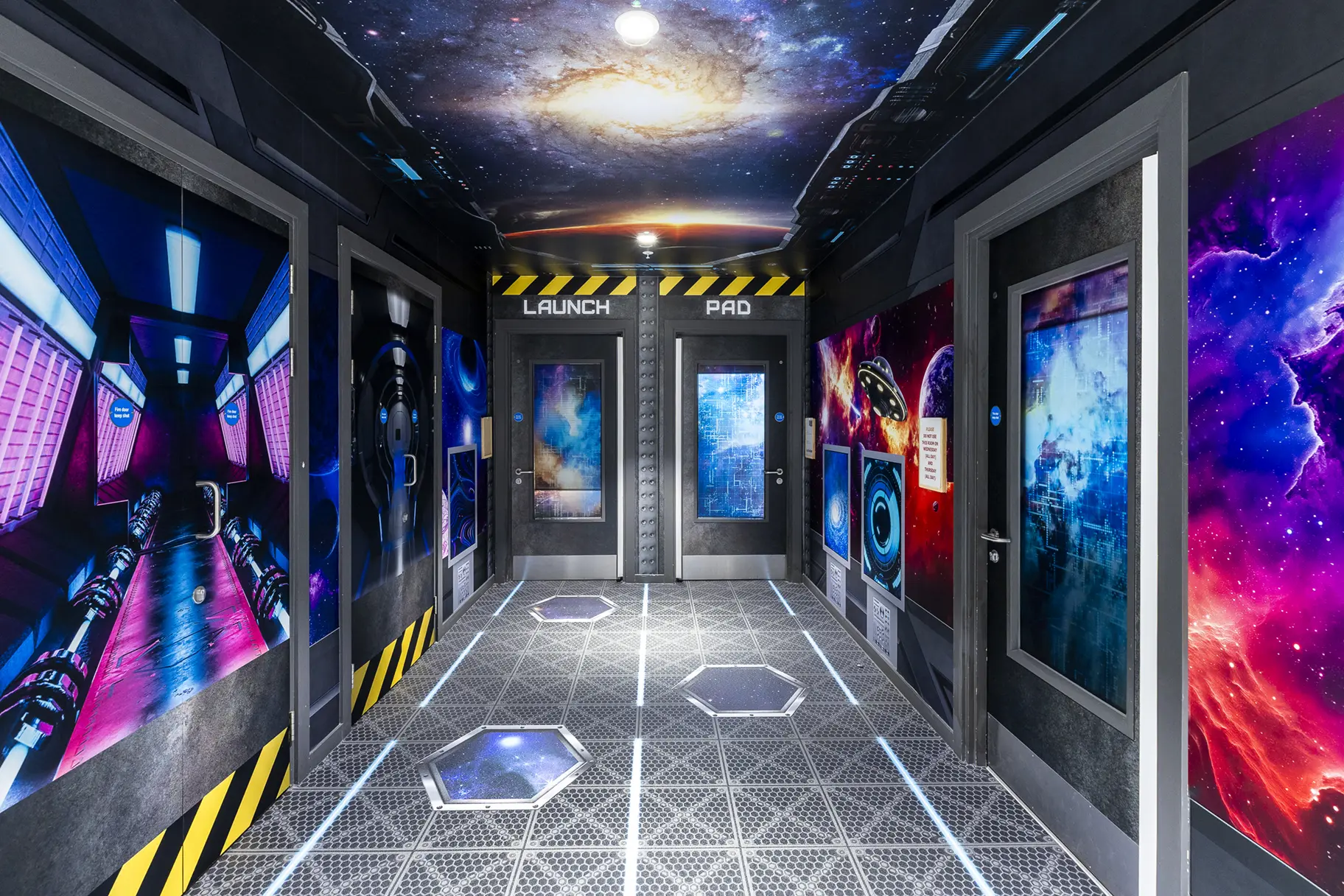
Not every pupil experiences the school day in the same way.
Some children seek movement, colour and sensory input. Others need stillness and reduced stimulation to feel settled. Creating clearly defined spaces for both ends of that spectrum helps pupils manage their energy and return to learning, ready to focus.
Design can play a key role in setting the tone of these areas.
Wall Art can:
King’s Cross Academy’s Launch Pad is a dedicated sensory space offers pupils somewhere to reset and receive the input they need. The environment feels intentional and supportive, helping students regulate before heading back into class.
When children know there’s a space designed specifically for their needs, anxiety often drops straight away.
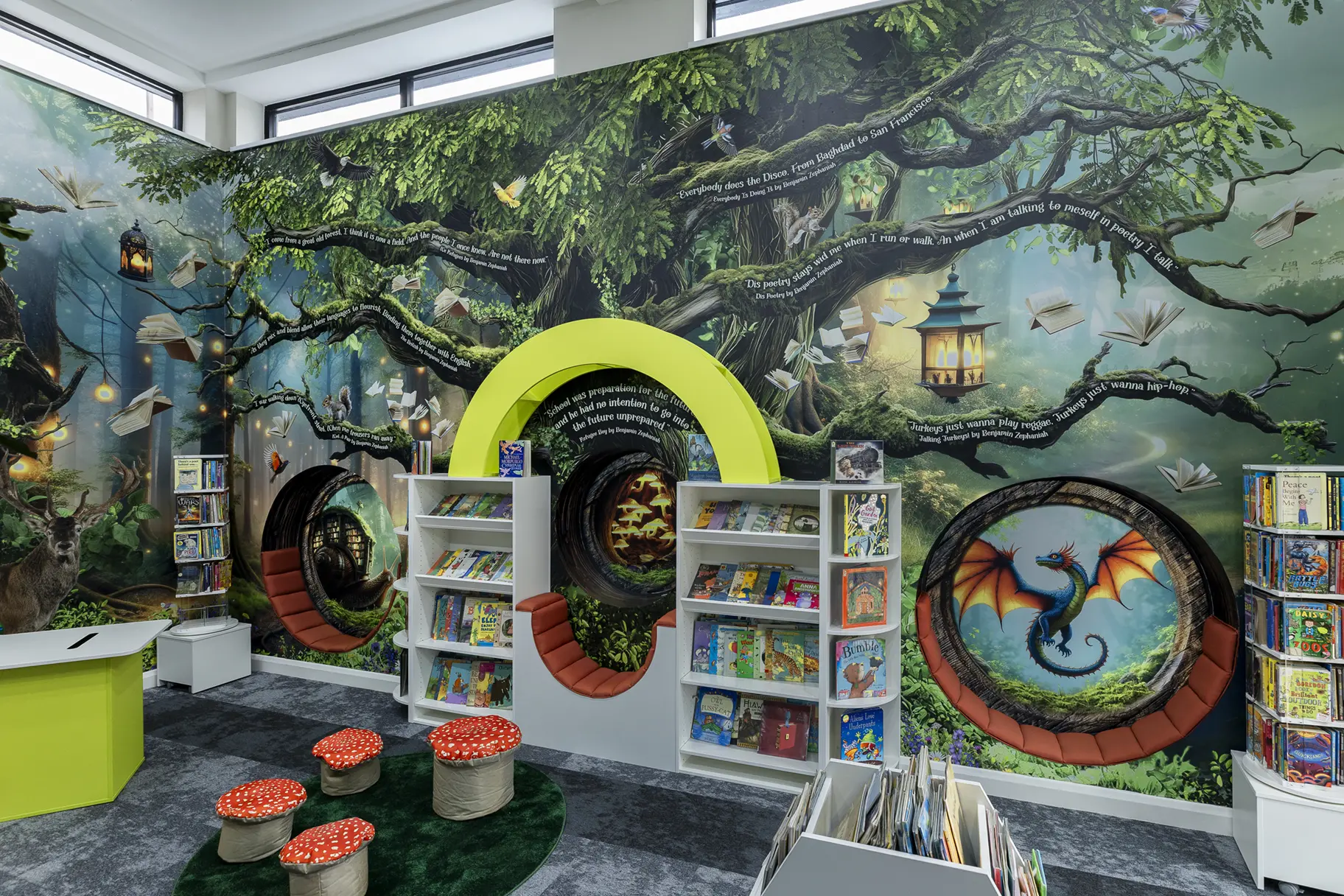
School life is busy. Corridors echo. Classrooms buzz. Lunchtimes are loud. For many pupils with SEND, that constant stimulation can feel overwhelming. Introducing visually calm areas gives students somewhere to pause and breathe.
Gentle colours, nature-inspired themes and uncluttered compositions help lower stress levels and create a softer atmosphere. Instead of demanding attention, these designs soothe it.
At Lingfield College, biophilic Wall Art in shared dining spaces uses natural imagery and muted tones to create a relaxed, restorative feel that encourages pupils to properly switch off between lessons.
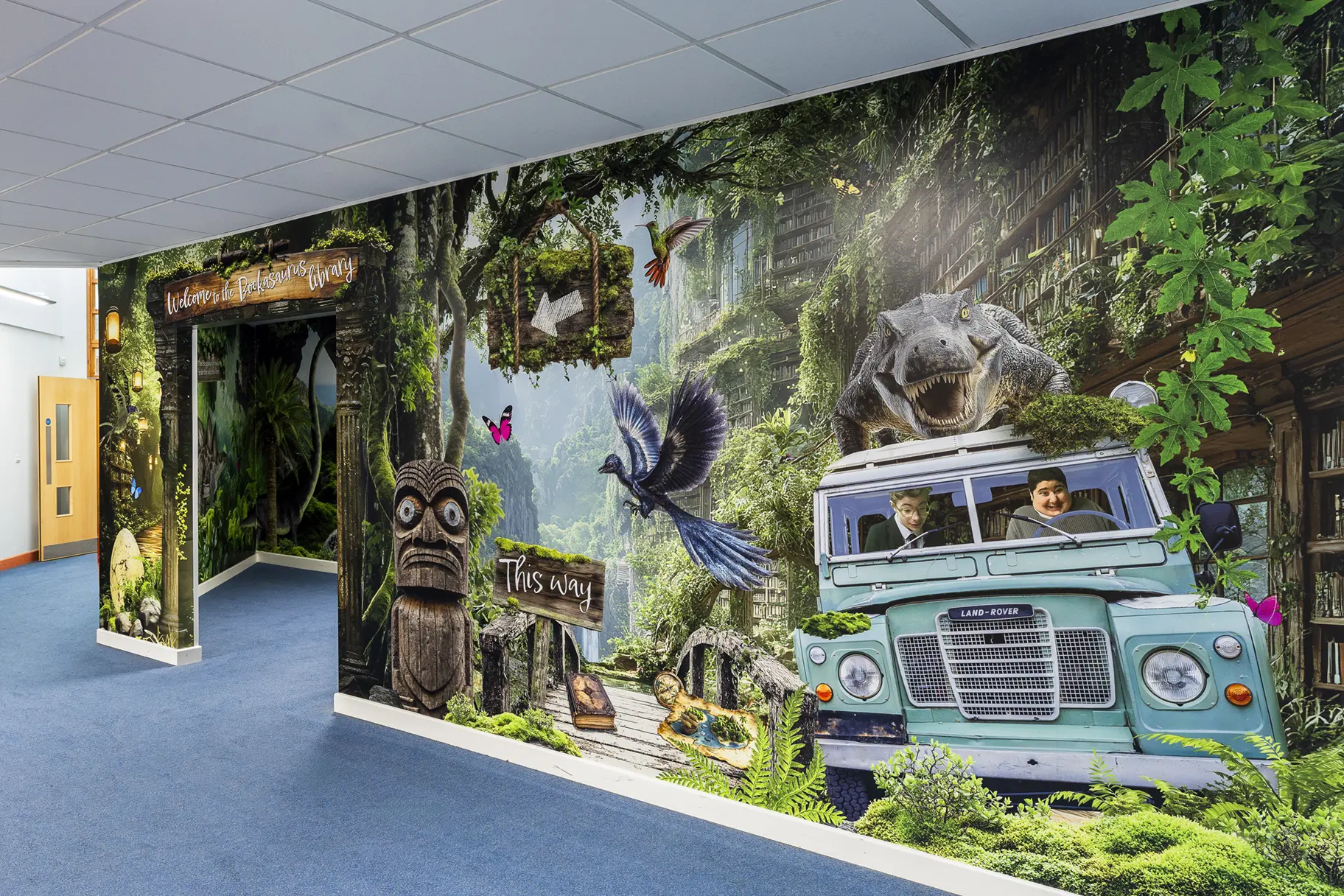
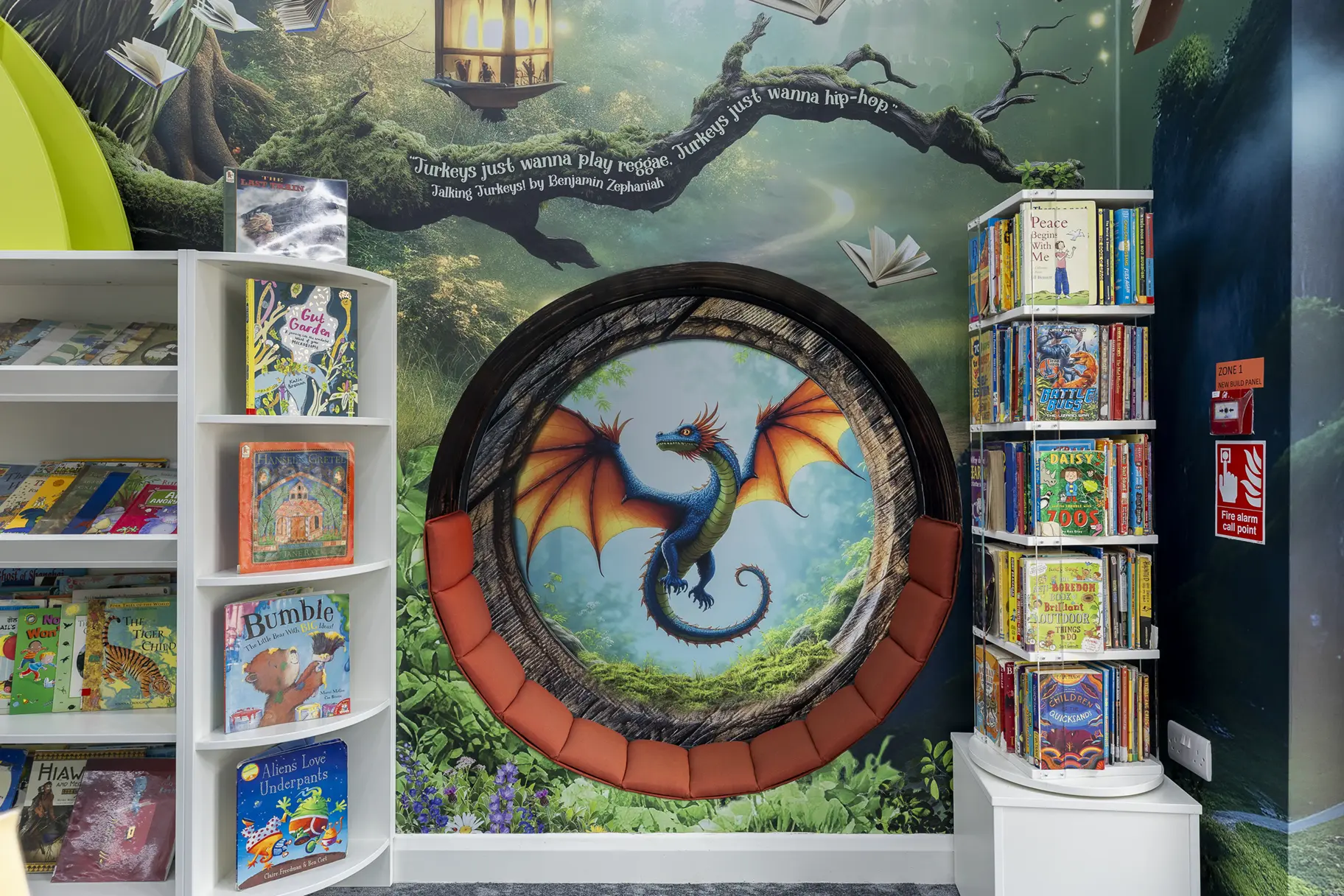
Meanwhile, William Murdoch Primary School’s library blends cosy visuals with lots of detail and small discoveries, giving children somewhere to escape, regulate and quietly explore at their own pace.
Sometimes the most powerful design choice is simply making a space feel calm.
All children experience big emotions. Some just need a little extra support to manage them. Designated wellbeing or regulation zones give pupils spaces where they can reflect, reset and develop coping strategies.
Wall Art can gently guide this process.
Visual prompts such as breathing techniques, affirmations, emotion scales or mindfulness cues can be built directly into the environment, offering tools pupils can use independently without always needing adult intervention.
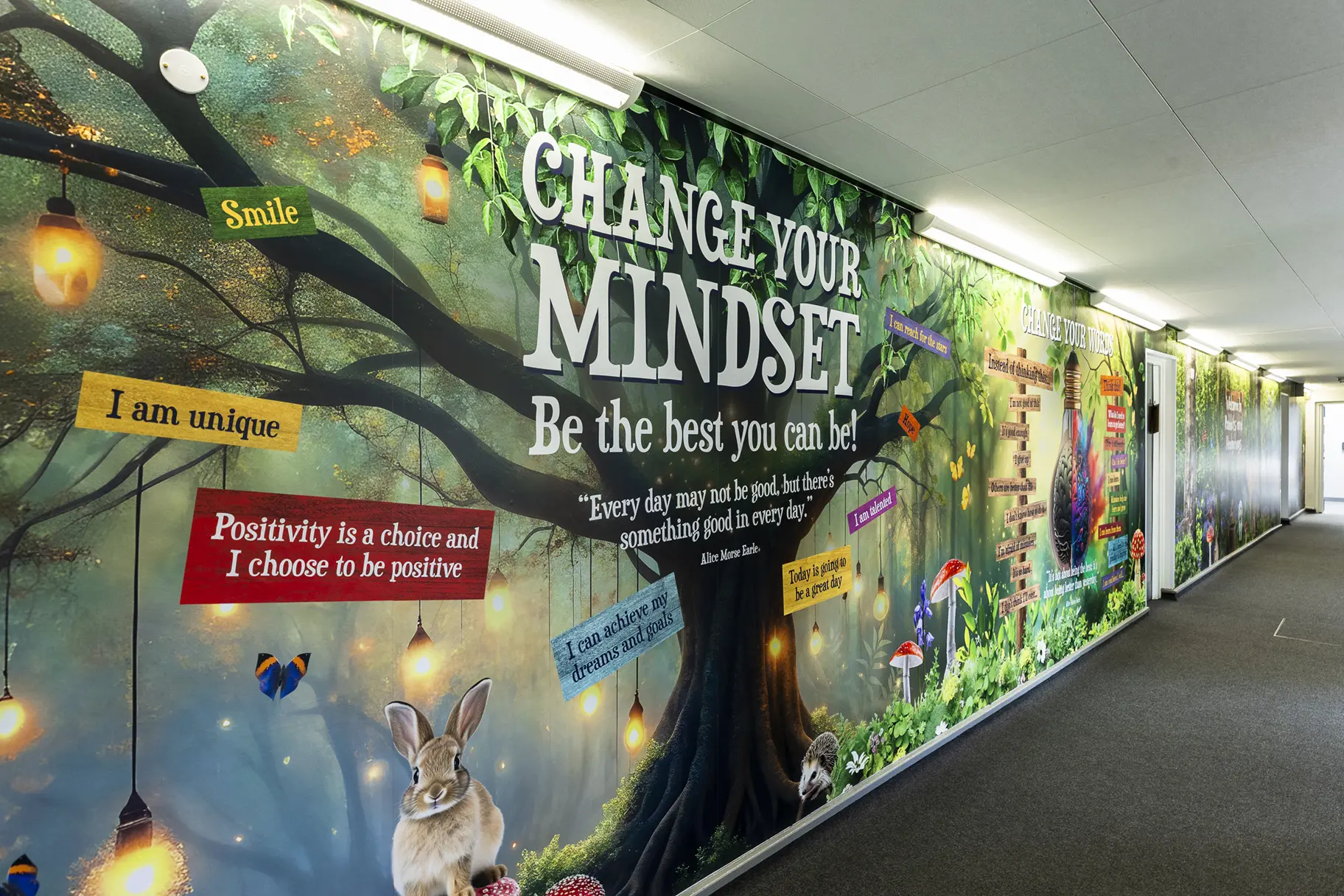
At King’s Worthy Primary School, their Positive Thinking Wall encourages self-reflection and growth mindset habits, giving children practical strategies to manage feelings and build resilience throughout the day.
Small visual reminders can have a surprisingly big impact on confidence and self-control.
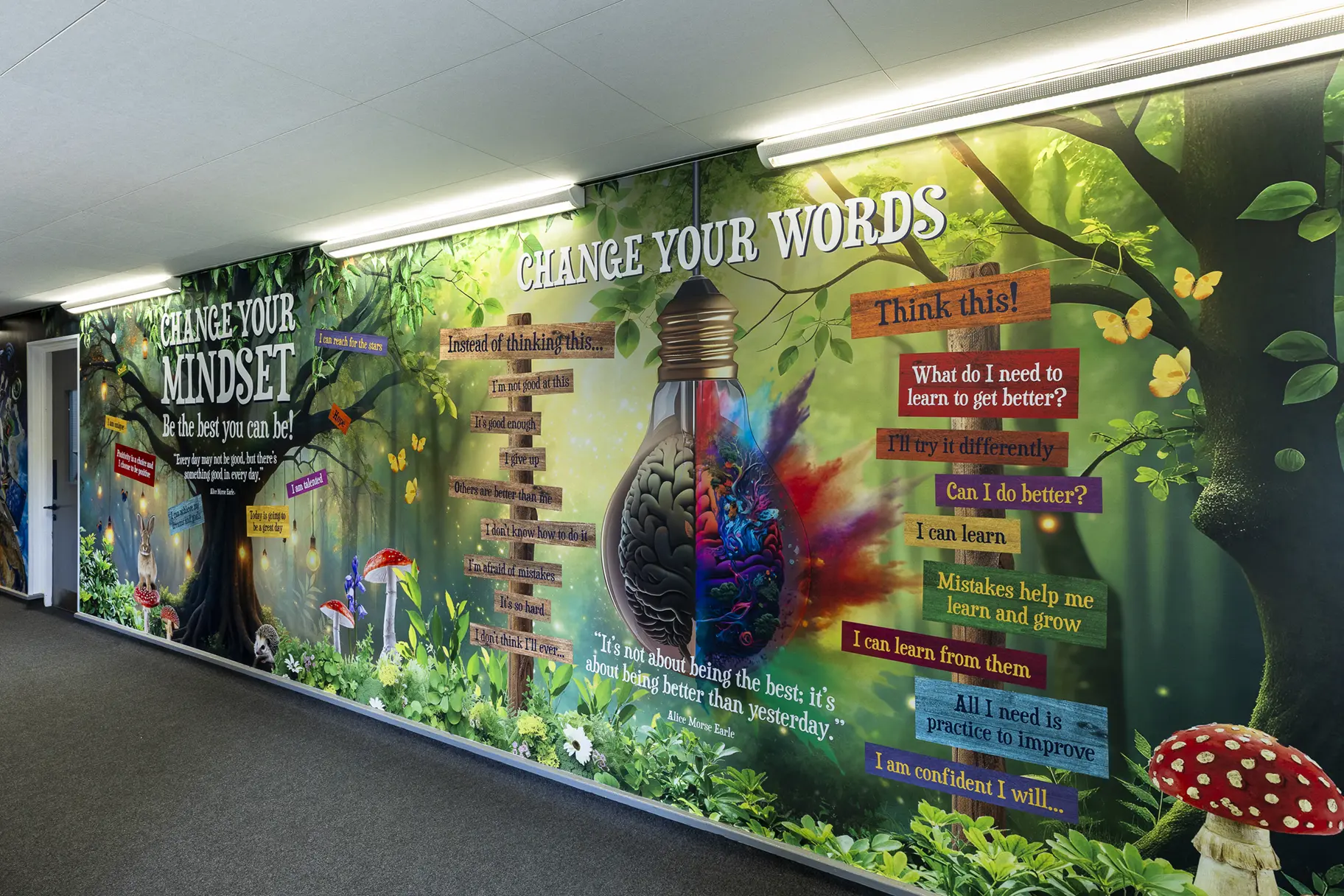
Positive words and inspirational phrases give children subtle tools to manage setbacks, make good choices and build confidence and esteem. Uplifting visuals, inspiring quotes and affirmations reinforce resilience and support pupils to remain and motivated.
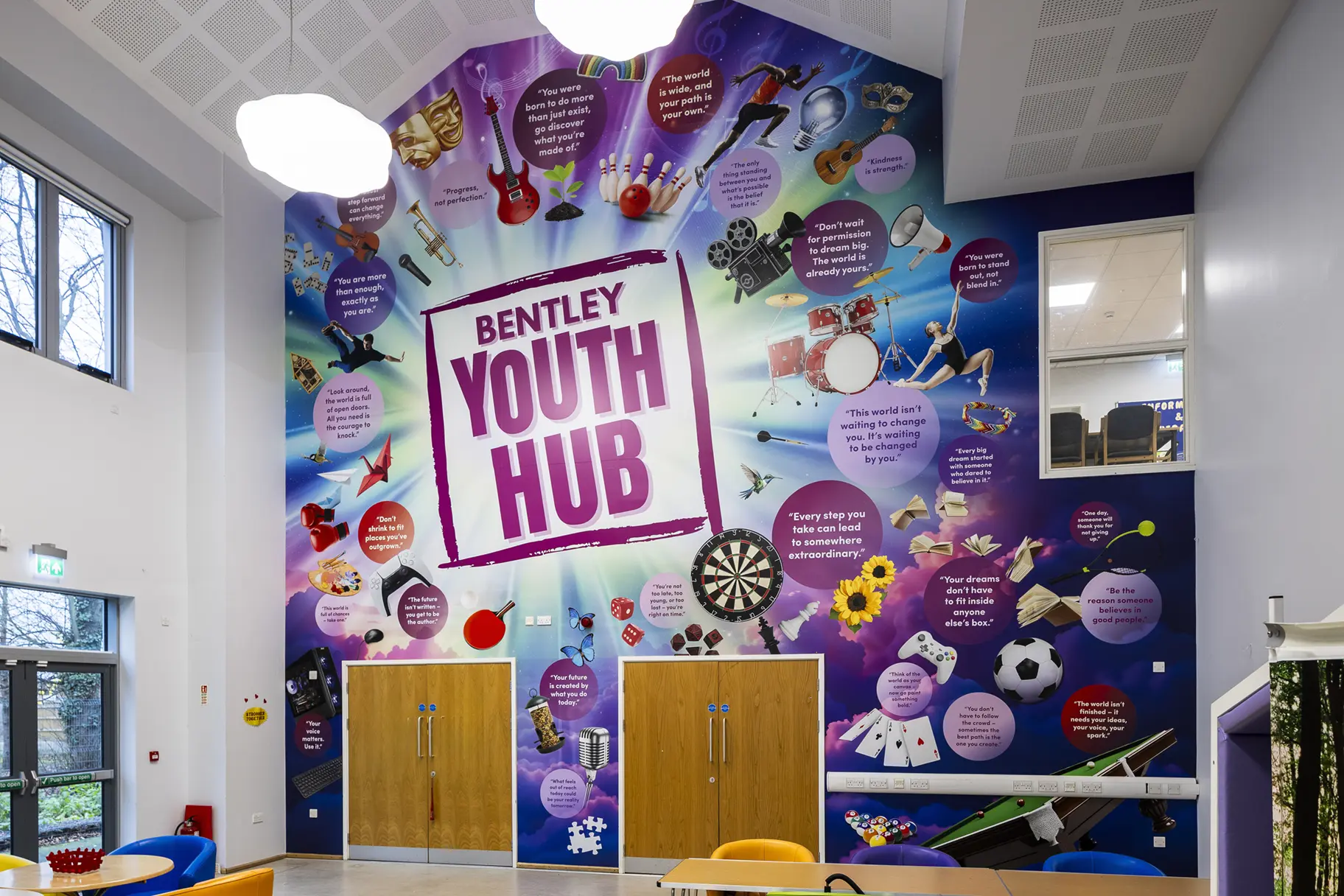
At Bentley Youth Hub, bold, uplifting graphics promote messages of resilience and possibility that reinforce that there’s space for every young person to succeed. The visuals celebrate individuality and the messages give pupils quiet support to manage setbacks, build self-belief and approach life and learning positively.
Small, consistent reminders like these can make a real difference, helping students feel valued, secure and ready to engage.
Feeling different or out of place can make school incredibly tough.
The visual language around a school should send one clear message: everyone is welcome here. Inclusive Wall Art helps create that culture. Imagery that celebrates diversity, teamwork and individuality helps pupils see themselves reflected in their surroundings.
When students recognise themselves in their environment, their sense of security and self-esteem naturally grows. Belonging isn’t just emotional — it can be designed into the walls.
Striking the balance between engagement and overstimulation is key.
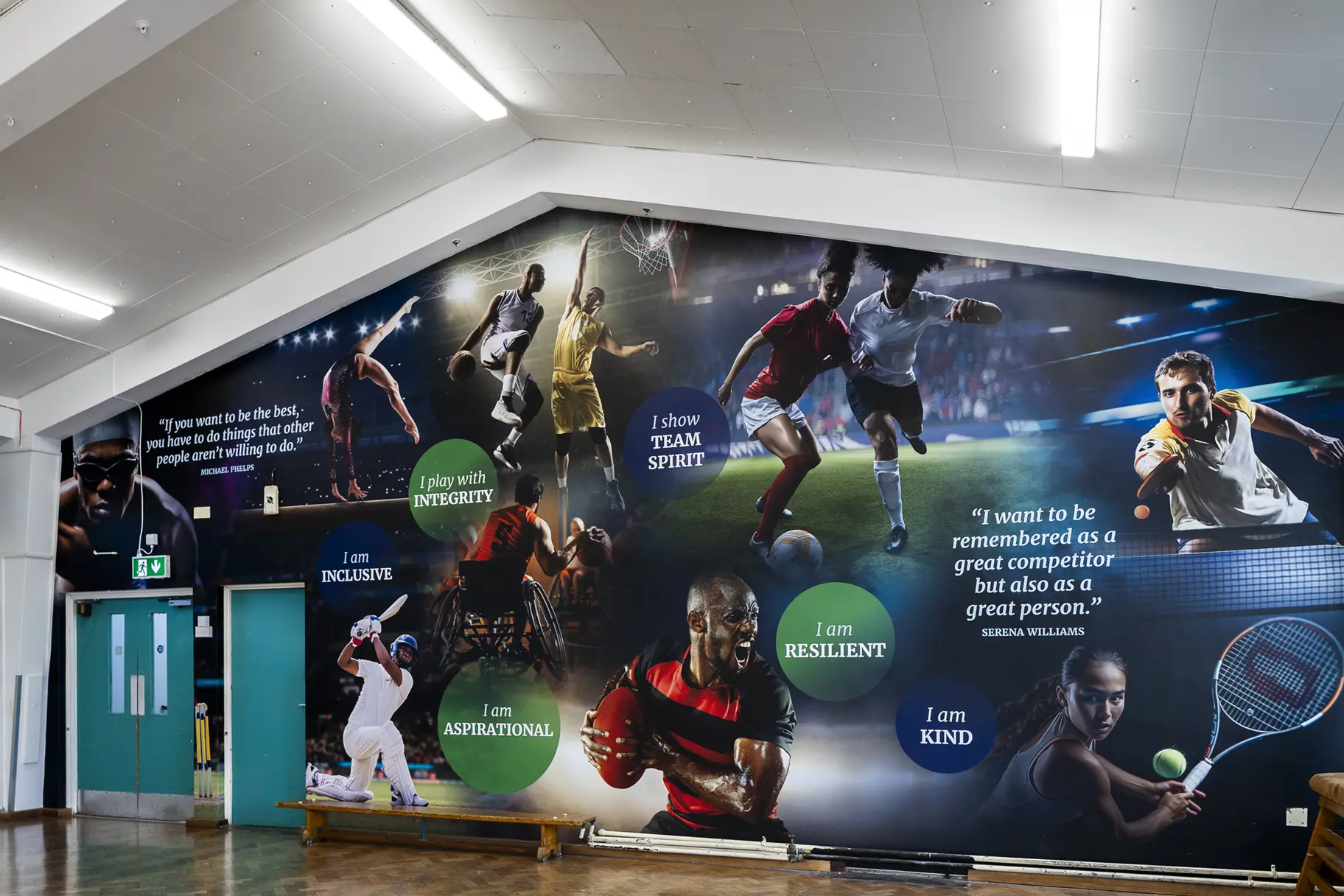
Well-designed Wall Art should capture attention without overwhelming the senses. Clear layouts, intentional colour choices and strong focal points keep spaces visually calm while still intellectually stimulating.
Incorporating facts, key information and gentle prompts for thinking turns everyday areas into passive learning opportunities. Pupils can absorb knowledge little and often as they move through the school — building confidence and independence without added pressure.
At St John’s Catholic Comprehensive, a large-scale World Map transforms a corridor into an interactive learning tool. Students revisit locations and information naturally throughout the day, strengthening memory and sparking interest simply through repeated exposure.
Pupils can absorb and remember the key facts at their own pace, It’s learning that happens effortlessly.

Supportive learning environments shouldn’t stop at the classroom door.
Visuals of nature indoors has a positive impact on wellbeing; being outside in nature is invaluable.
Outdoor spaces offer freedom, movement and valuable sensory regulation. Fresh air and open space can instantly reduce overwhelm and help children feel more relaxed and ready to engage.
Designing these areas with Wall Art adds another layer of opportunity.
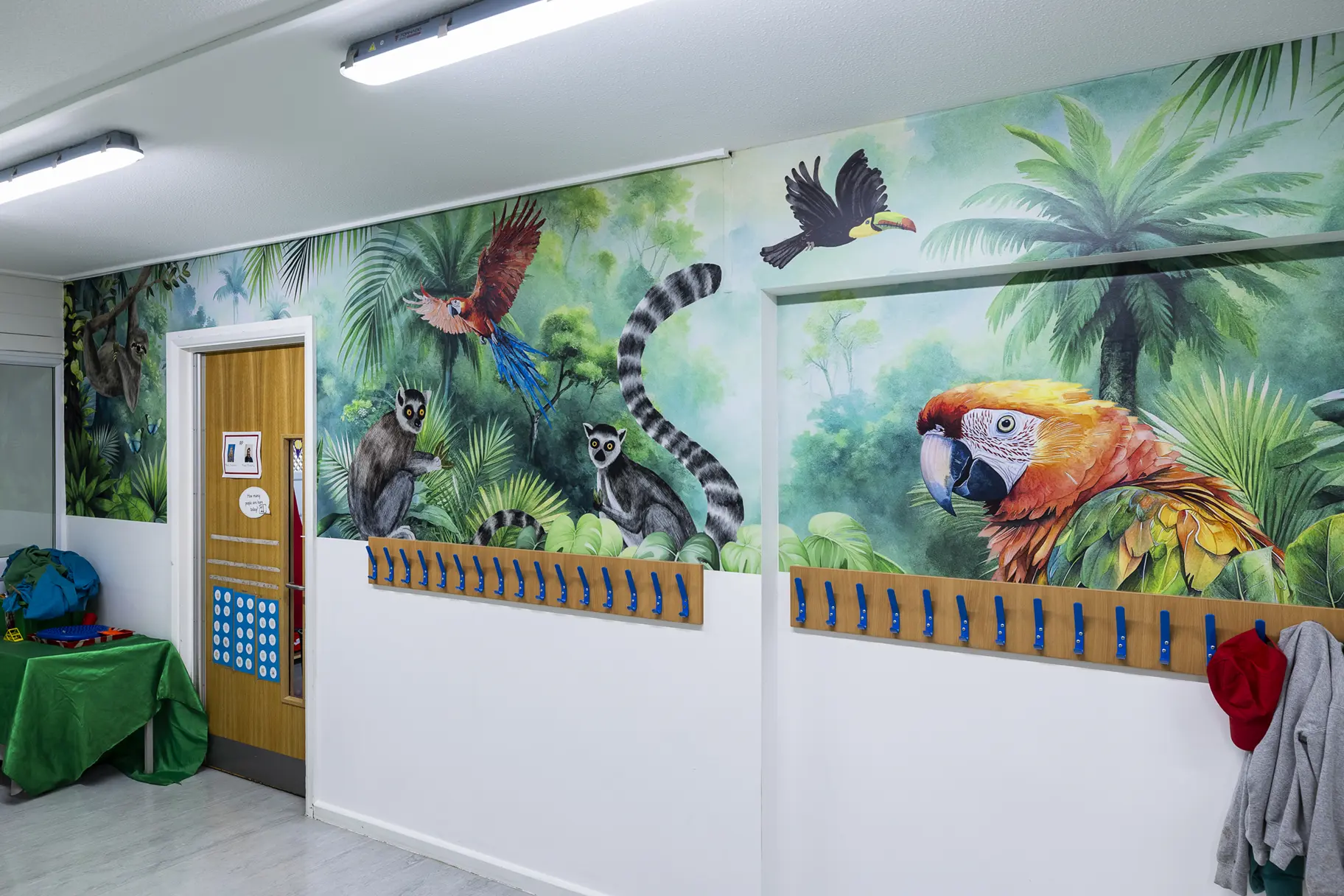
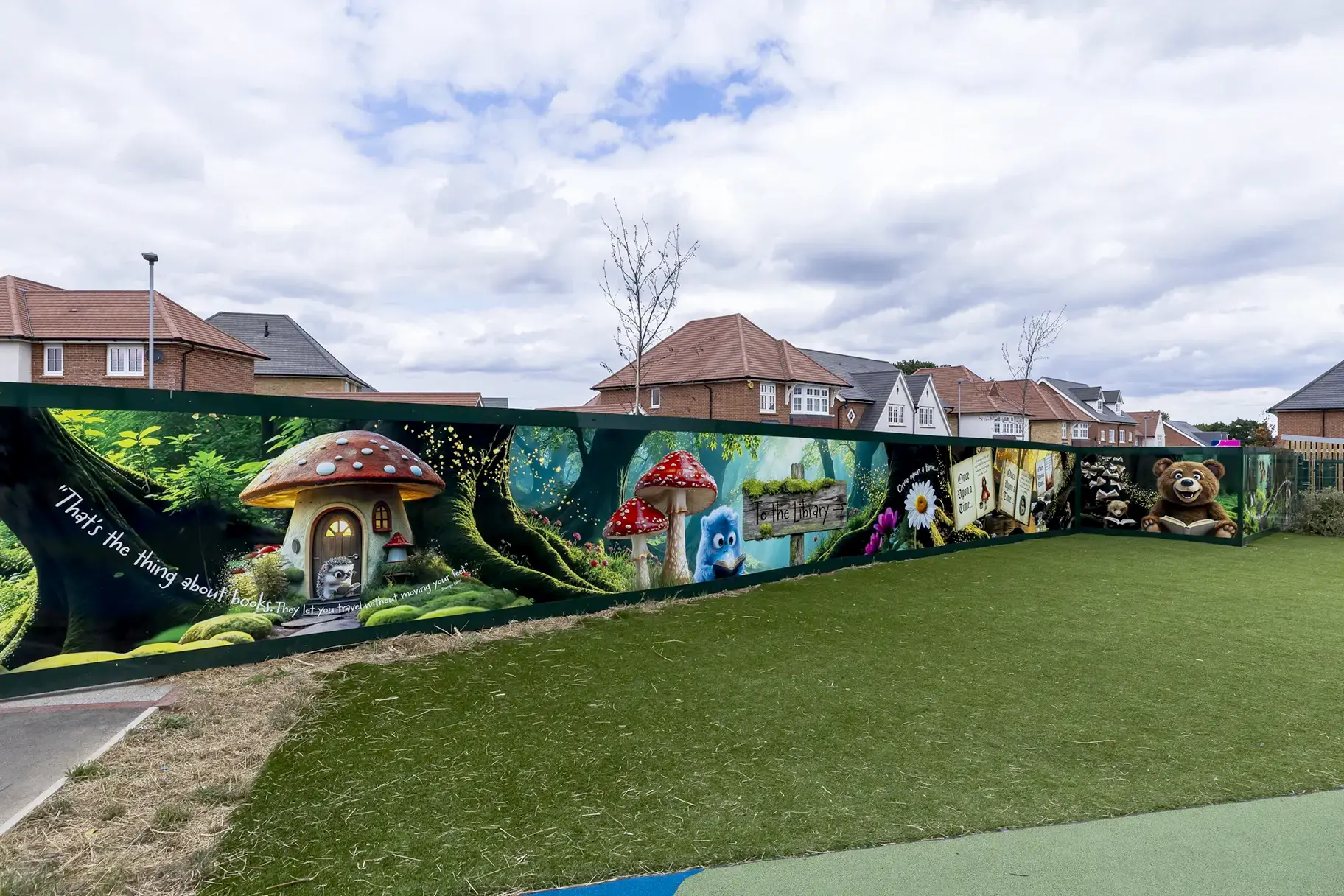
At Chapel Hill Primary School, what was once a simple boundary fence is now a visual space with subtle storytelling, hidden details and playful visuals that spark imagination and invite discovery. Instead of structured learning, children explore, notice and interact at their own pace, building curiosity through creativity and play.
Pupils are invited to explore, spot words, follow stories and connect with language in a fun, low-pressure way.
Finally, one of the simplest ways to support pupils with SEND is also one of the most practical: helping them find their way around.
Large schools with similar-looking corridors can be confusing, especially for children who rely on routine and predictability.
Strong visual cues make navigation far easier, such as:
At Heathlands School, subject Wall Art helps pupils immediately recognise learning areas, reducing uncertainty during transitions and helping them arrive ready to learn.
And through our partnership with Widgit, schools can introduce universally understood symbols that support communication, comprehension and independence across the entire site.
When pupils don’t have to worry about where they’re going, they can focus their energy on learning instead.

When Wall Art is used intentionally, it becomes much more than decoration. It;
With the right environment in place, pupils with SEND don’t just cope at school, they flourish.
If you’re looking to create sensory-aware, clearly zoned and welcoming spaces that genuinely support your learners, we’d love to help.
Get in touch to arrange a free consultation and start designing a school where every pupil can thrive.
We’ll visit your school to understand your goals, explain our process and provide you with a no-obligation quote.