

or call 020 7404 3400

or call 020 7404 3400
Or call 020 7404 3400

From the start, student learning was central. The school wanted more than decorative displays—while departments already shared curriculum content on boards, the goal was to evolve these into interactive environments that encourage curiosity, discussion, and deeper engagement.
Working closely with leadership and subject teams, we created bespoke designs aligned with Repton’s curriculum, ethos, and identity. These designs integrate key learning concepts directly into the environment while reflecting the school’s academic culture and prestige.
Our process focused on understanding how students learn within spaces, translating curriculum themes into clear, engaging visual tools. By combining educational insight with design expertise, we developed environments that reinforce knowledge and inspire deeper thinking.
The project centred on secondary corridors—spaces students use daily—transforming them into meaningful learning environments. Rather than simply enhancing aesthetics, the designs encourage students to pause, reflect, and engage with their subjects as they move through the school.
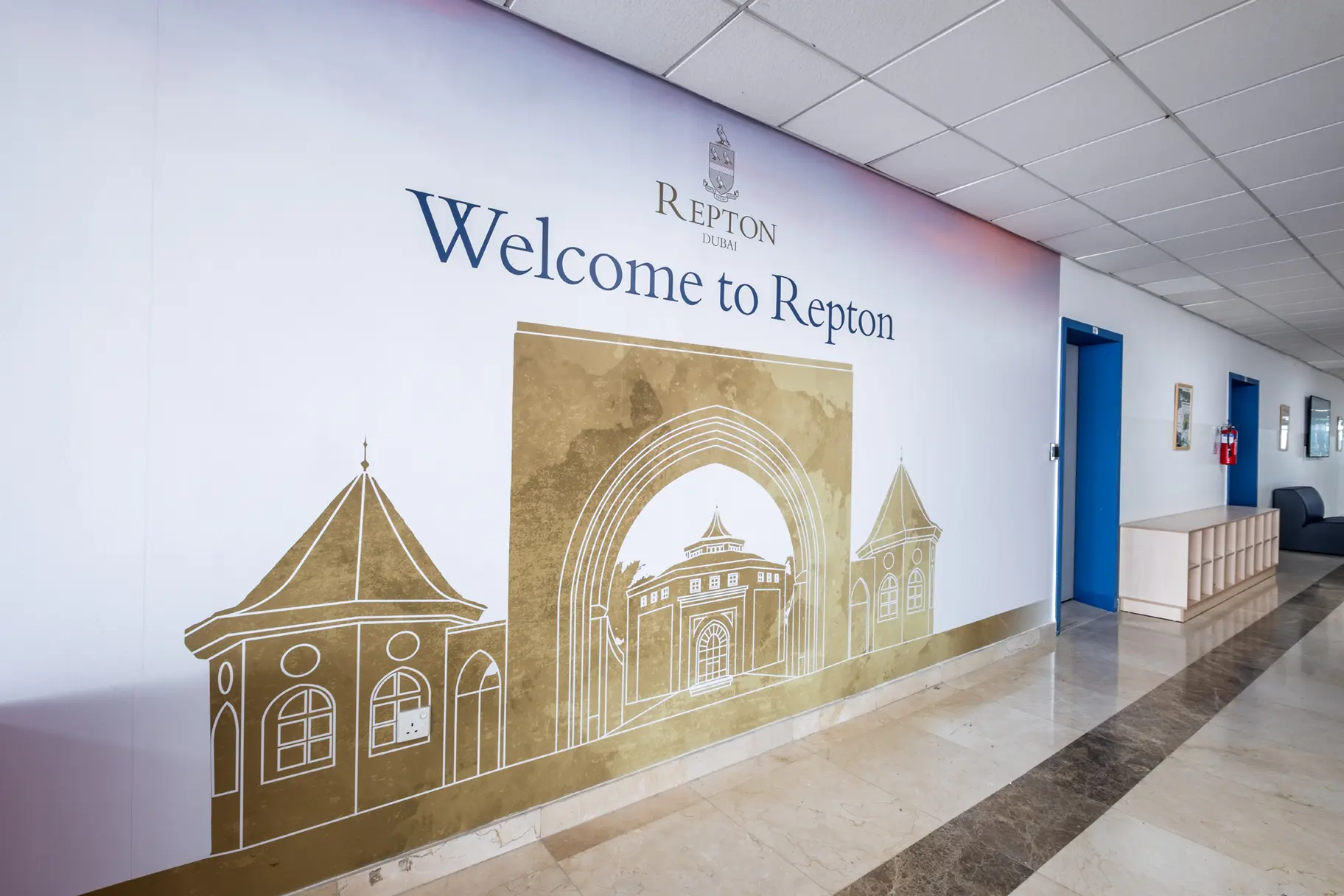
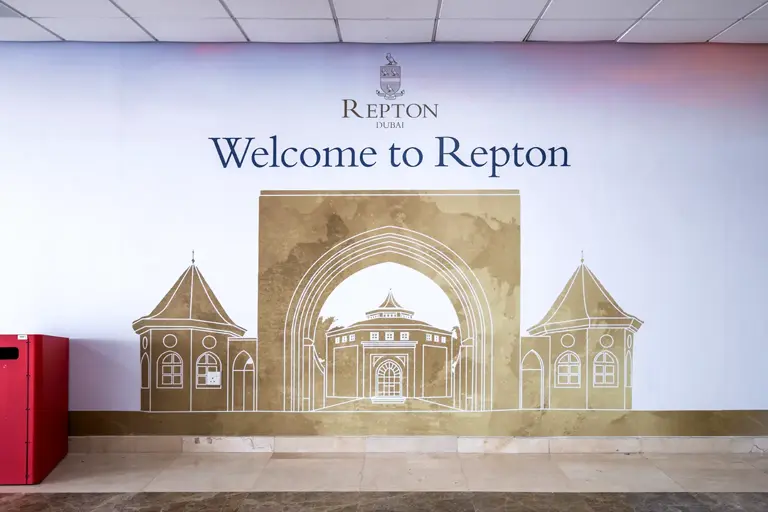
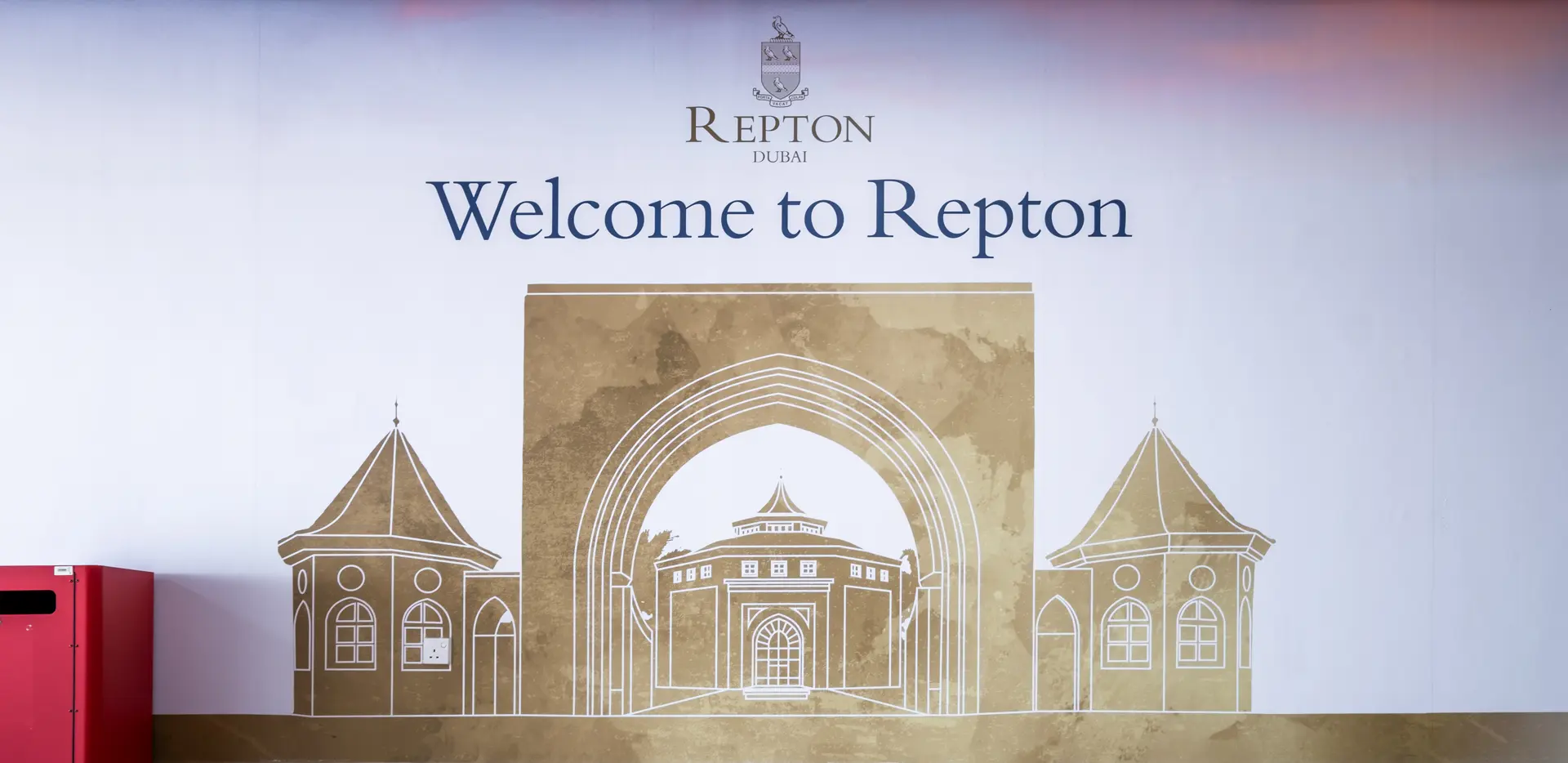
The journey through the school begins at the main entrance.
Here, a striking welcome wall celebrates Repton School Dubai and its distinctive campus setting. Inspired by the architecture and scale of the school, the design captures the character of the campus, which has become a recognisable landmark within Dubai’s educational landscape.
Positioned at the point of arrival, the wall creates an immediate sense of identity and pride, welcoming students, staff and visitors into the Repton community from the moment they enter the building.
From this point of arrival, the journey continues through the secondary corridors where subject learning becomes part of the environment itself.
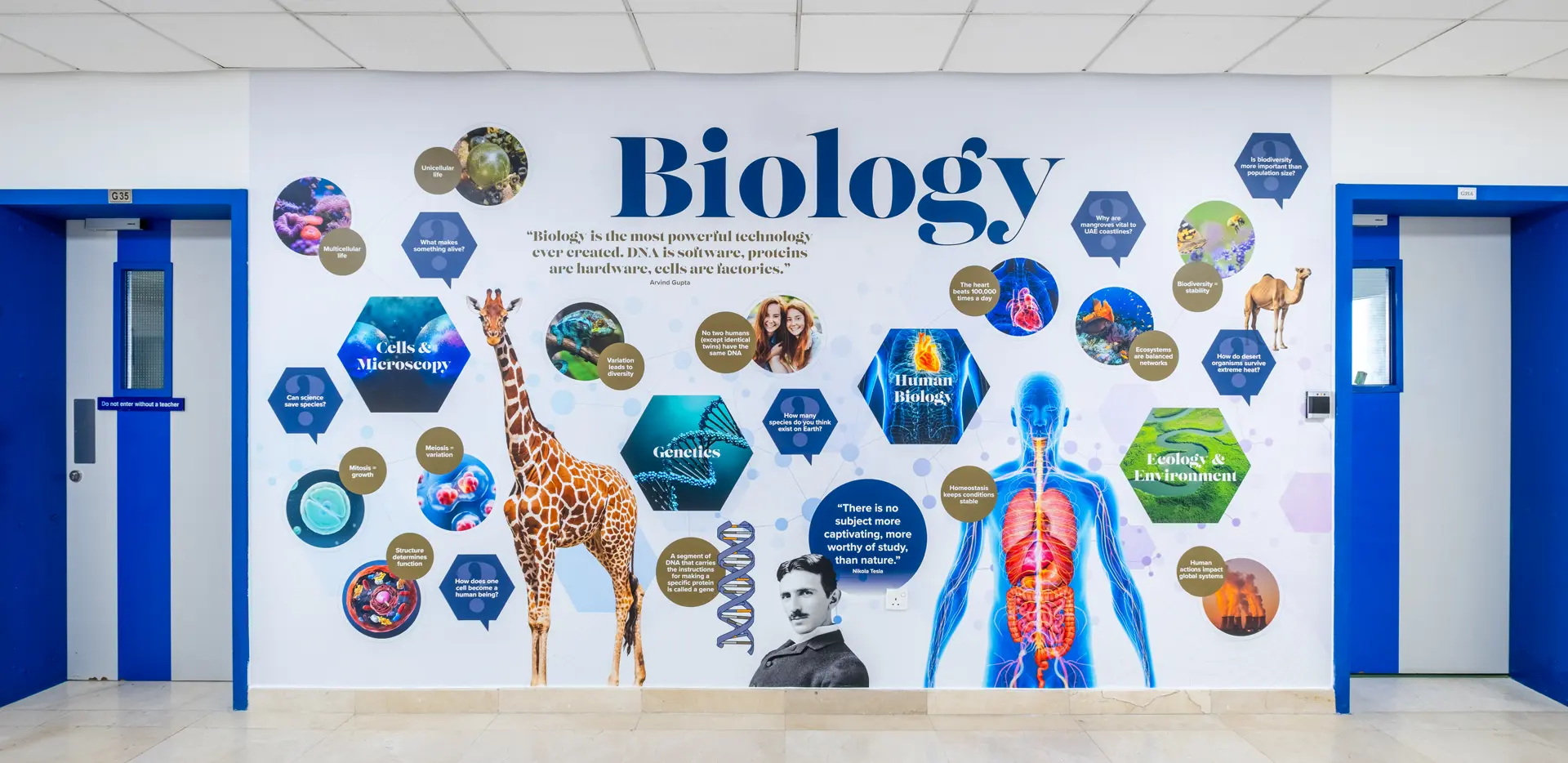
The Biology wall invites students to explore the complexity and wonder of life sciences.
Developed in collaboration with Repton’s science department, the design was shaped around key areas of the secondary biology curriculum. Together, the team identified core themes that students encounter throughout their studies, ensuring the wall would reinforce learning while encouraging curiosity beyond the classroom and connections to the real world.
Topics such as genetics, human biology, biodiversity and ecology are brought together through striking visual imagery and carefully placed prompts. Large scale illustrations, including a detailed human anatomy graphic and DNA structures, create immediate visual impact, while smaller questions and facts invite students to pause and engage more deeply with the ideas presented.
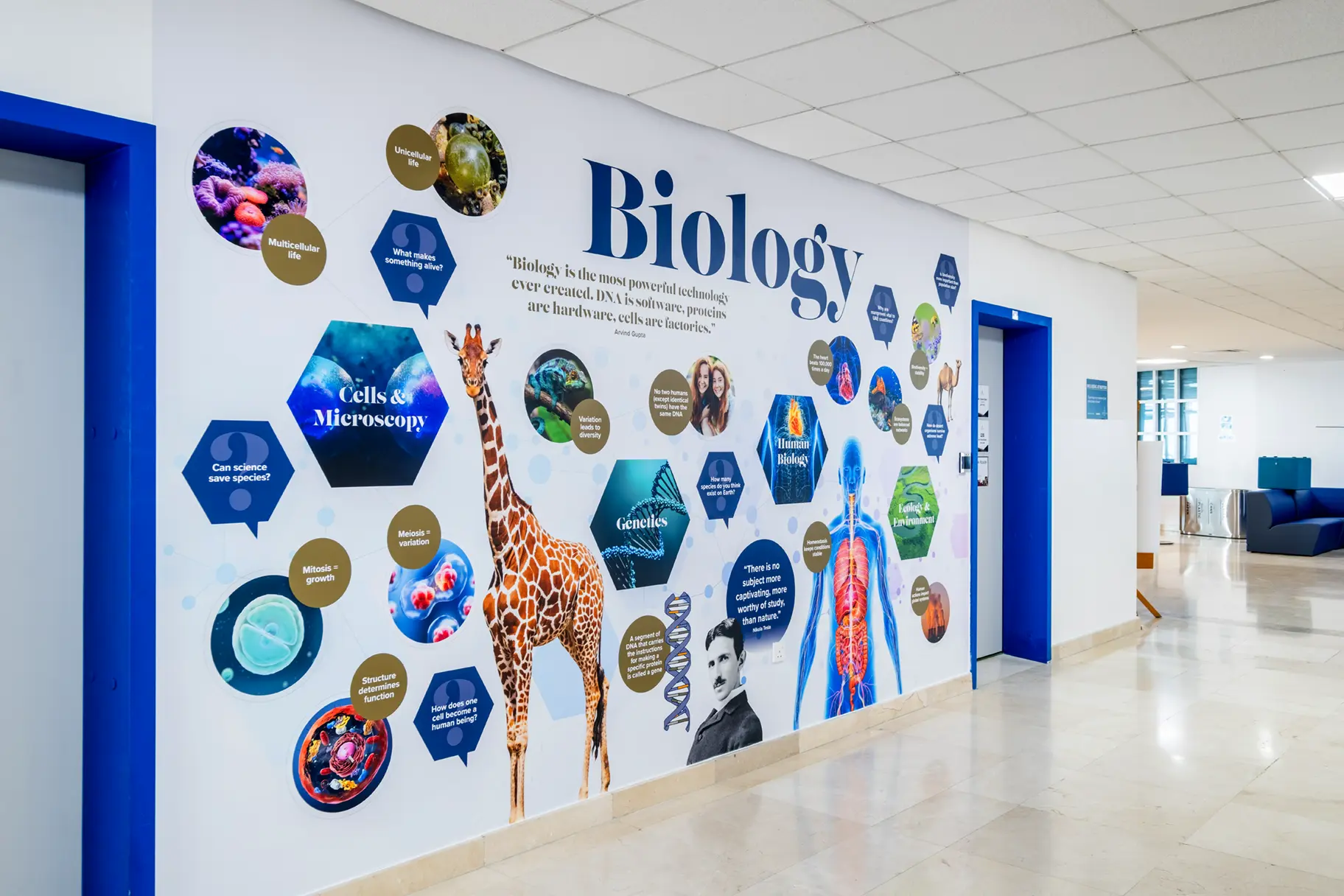
Questions such as “How many species exist on Earth?” and “Why are mangroves vital to UAE coastlines?” encourage discussion and reflection, prompting students to think about the natural world and the systems that sustain it, while also connecting learning to the local environment.
By embedding these concepts directly into the corridor environment, the wall transforms a transitional space into an opportunity for exploration, reinforcing the curiosity and inquiry that sit at the heart of scientific learning.
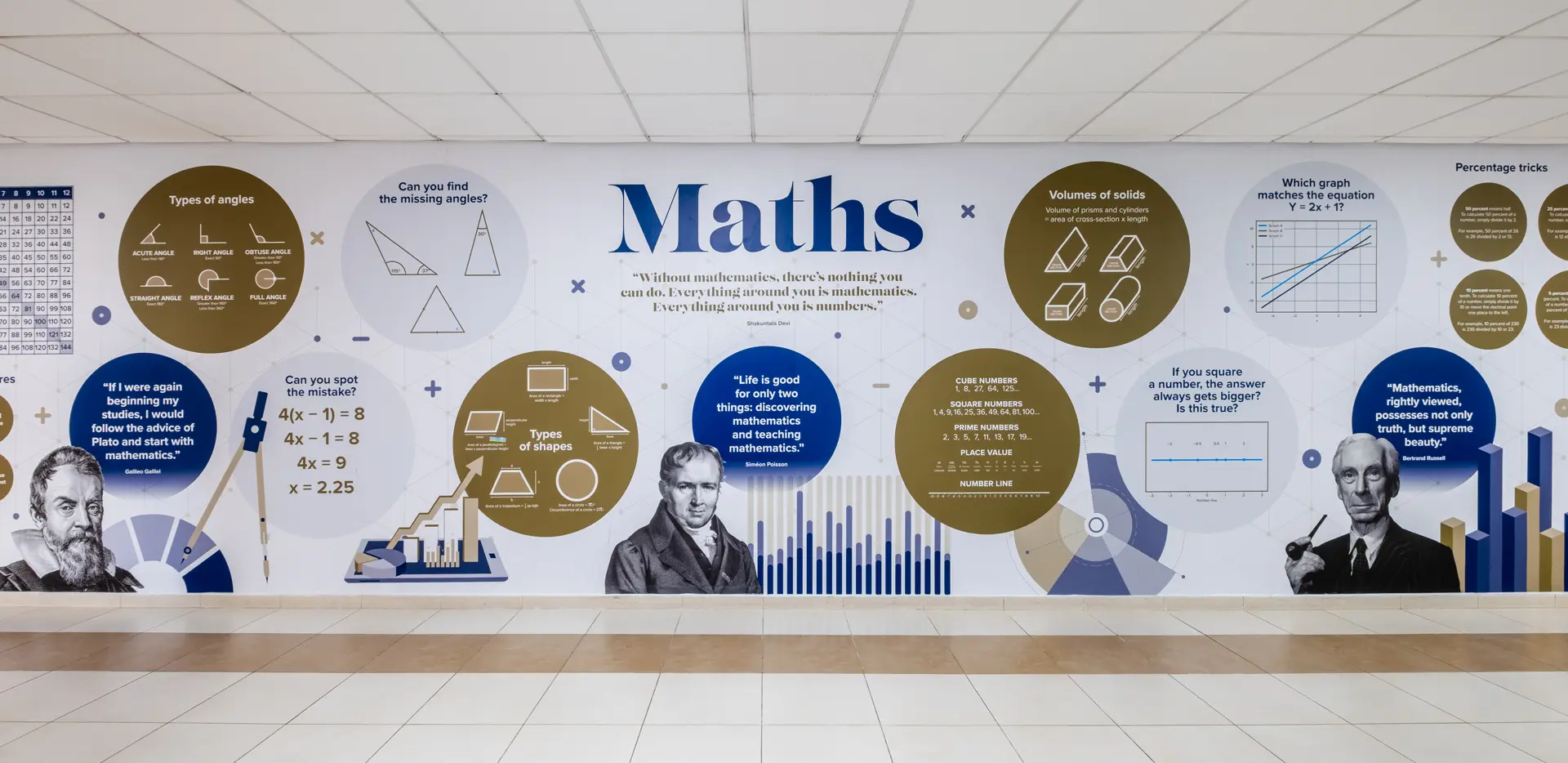
There is rarely just one way to solve a mathematical problem. As students move through the Maths department, the wall sparks discussion and debate, encouraging them to question ideas and explore different solutions.
Thoughtfully chosen prompts challenge students to justify their thinking, identify errors and consider alternative strategies, reinforcing the higher-order reasoning that sits at the heart of mathematical learning.
Across the wall, students encounter challenges that invite them to test their thinking, question assumptions and explore different strategies. Some problems have more than one possible answer and some problems invite students to spot errors in reasoning, both powerful ways to develop mathematical understanding. Others ask students to identify mistakes in mathematical reasoning, developing an essential skill in problem solving and critical thinking.
Developed in collaboration with the mathematics department, the content reflects concepts and strategies encountered throughout the secondary curriculum, spanning all key stages from Year 7 through to Sixth Form. Carefully selected problems encourage higher order thinking, prompting students to analyse, justify and explain their reasoning.
Clear visuals, diagrams and structured prompts make complex ideas accessible at a glance, allowing students to engage with the content quickly as they move through the space. In doing so, mathematical thinking becomes part of the everyday environment, embedding concepts naturally and reinforcing learning in moments students might not even realise they are revisiting the subject.
By bringing these ideas out of the classroom and into the corridor, the wall encourages discussion, curiosity and deeper engagement with the logic and reasoning that underpin mathematics.
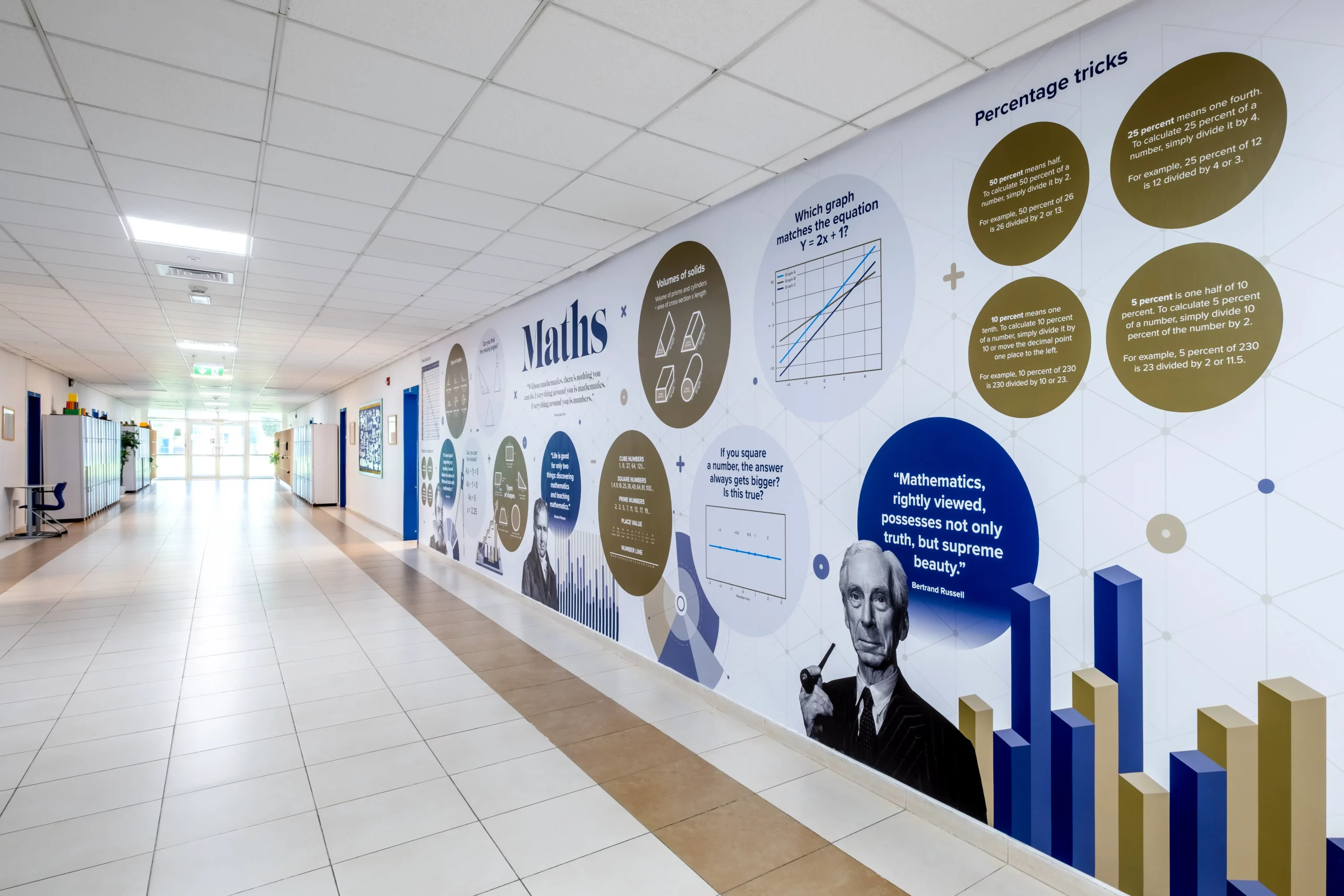
Together, these spaces demonstrate how thoughtfully designed environments can support learning beyond the classroom.
From the moment students enter the school, the welcome wall celebrates the identity and pride of the Repton community. As they move through the corridors, subject walls in biology and mathematics invite them to question, explore and engage with ideas that connect directly to their studies.
Through a series of carefully designed walls, curriculum themes are woven into the everyday life of the school, encouraging students to pause, reflect and discuss ideas.
The result is an environment where the spaces students move through each day contribute to the culture of the school itself, reinforcing the values, academic ambition and spirit that define Repton School Dubai.
We’ll visit your school to understand your goals, explain our process and provide you with a no-obligation quote.