

or call 020 7404 3400

or call 020 7404 3400
Or call 020 7404 3400
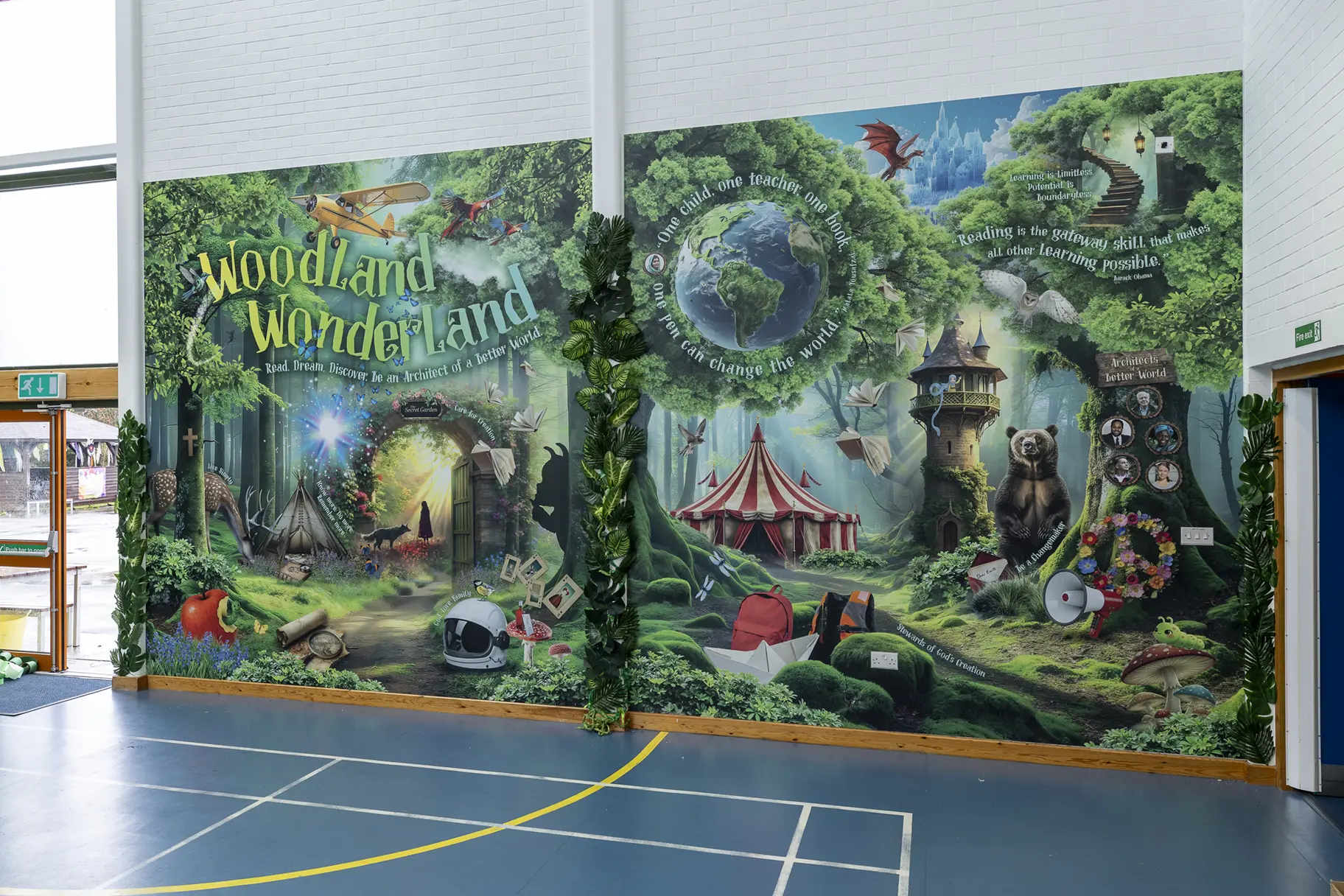
Research from healthcare and environmental psychology has reshaped how we understand wellbeing and the impact of people’s environments. It clearly shows that nature is not a luxury, but a fundamental component of human health.
A study published in Scientific Reports found that people who spend at least 120 minutes per week in natural environments are significantly more likely to report good health and psychological wellbeing. The implications are far-reaching. And there’s a link between nature exposure and reduced stress, improved mood, and better overall health outcomes.
What is perhaps even more compelling is that benefits do not require long periods of immersion. Emerging research shows that even short interactions with nature can have measurable effects.
A study, using real-time data collection, showed that increased exposure to diverse natural environments is directly associated with incremental improvements in mental wellbeing. In other words, small, repeated moments of connection with nature can meaningfully support how we feel and function.
In healthcare design, this evidence led to the widespread adoption of biophilic design. This approach integrates natural elements into built environments. Medical settings increasingly incorporate natural light, organic materials, and, crucially, visual representations of nature to reduce stress and support recovery.
These principles are underpinned by theories such as Attention Restoration Theory (Kaplan & Kaplan) and Stress Reduction Theory (Ulrich). Both explain how natural environments help restore cognitive capacity and regulate emotional responses.
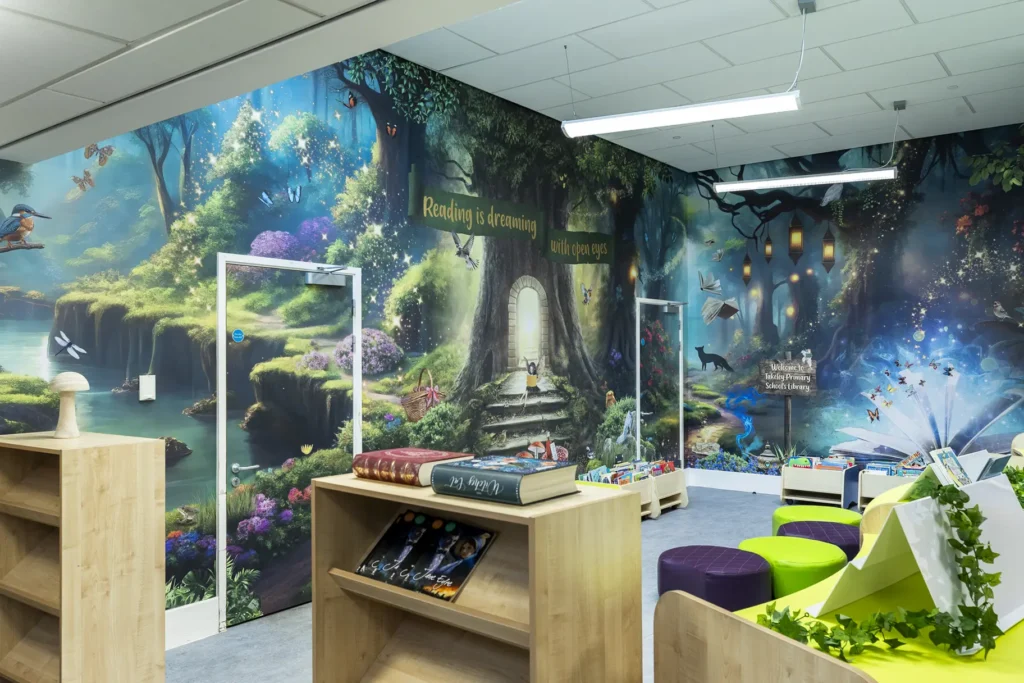
Importantly, research shows that simulated nature can still deliver many of these benefits. Patients exposed to images of natural landscapes report lower levels of anxiety and improved mood, even without direct access to outdoor environments. This is a critical insight when considering spaces where real nature is limited.
This aligns with a growing body of evidence showing that visual and creative experiences can have a meaningful impact on wellbeing. Research from University College London has brought together findings from thousands of studies. These demonstrate that engagement with the arts can support mental health, reduce stress, and improve quality of life. While nature-themed Wall Art is not an arts intervention in the traditional sense, it reflects the same principle. Thoughtfully designed visual environments can contribute positively to how people feel, think, and function within a space.

The exciting outcome of all this research for us has been how it can be applied to education settings and visual learning environments. Specifically how it supports the wellbeing of pupils and staff, and informs how we create wellbeing-supportive spaces. Some years ago, we participated in a research project on bringing the concepts of biophilic design into educational environments.
Promote Your School proudly played a part in Putney High School’s BREATHE project. We created a large design, using stunning nature photography by Matthew Cattel. We then printed the design and installed it in the test English classroom at Putney High School. A total of 96 per cent of students at Putney High School expressed positive attitudes towards the new design of the classroom. While 78 per cent of pupils expressed that they “felt healthier”.
In 2021, this research and the Biophilic Classroom Exhibit was awarded a Gold Medal by RHS Chelsea Judges. They described the study and results as “ground breaking”.
Since then we have championed wholeheartedly the use of nature in our Wall Art to enhance visual environments with national elements to support pupils and staff wellbeing.
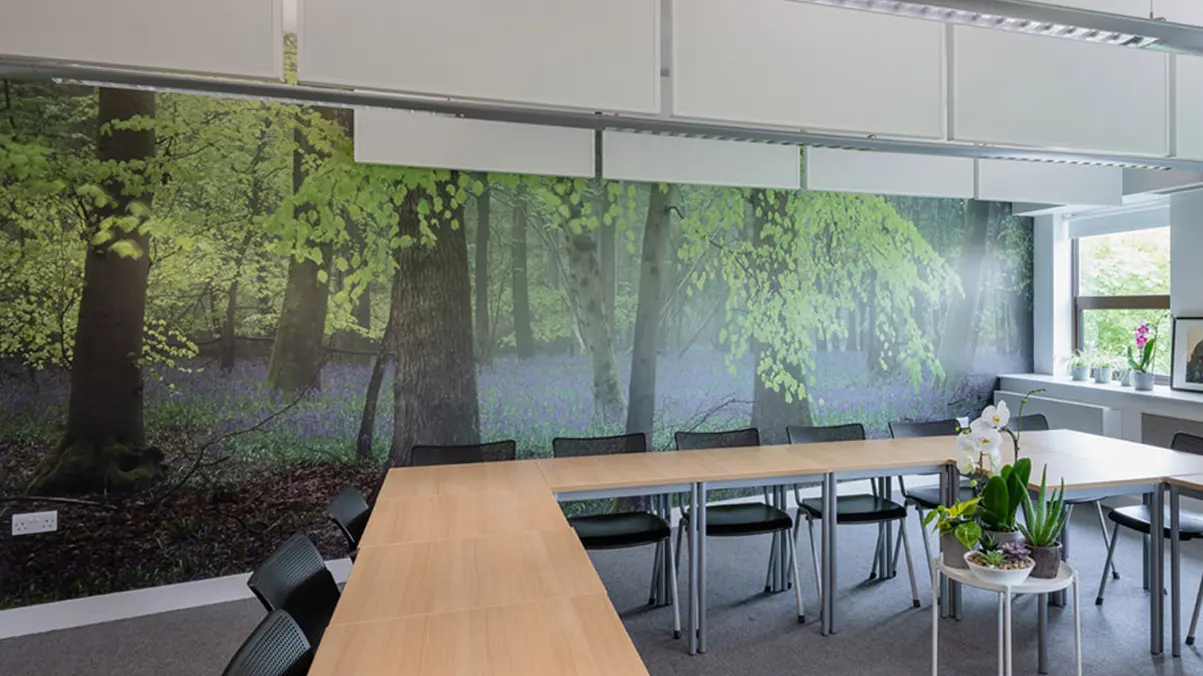
The impact of the photographic mural demonstrated change through a more animated environment, whereby students choose to move to a seat with a view of the mural, and the teacher expressed ‘I love teaching in this room’ while facing the mural to address the students.

Schools are environments of sustained cognitive demand. Attention, emotional regulation, and mental resilience are not secondary outcomes. In fact, they are essential for learning. Where healthcare design has seen the benefits of nature as a tool for recovery and calm, in education settings this can be translated into a tool for readiness to learn.
Frequent access to green space is not always possible, especially in urban schools. However, the research suggests that this does not have to be a barrier. Nature themed Wall Art can act as a proxy for real nature. This is particularly evident when it is grounded in biophilic principles and offers consistent, passive exposure throughout the day.
At its most effective, this kind of visual intervention supports what psychologists describe as attention restoration. It helps students recover from mental fatigue and maintain focus over time. Nature themed Wall Art can reduce background stress levels, create a calmer atmosphere, and contribute to improved behaviour and concentration. Just as importantly, it introduces an ongoing relationship with nature for students who may otherwise have limited access to it.
Our approach is rooted in translating this evidence into design.
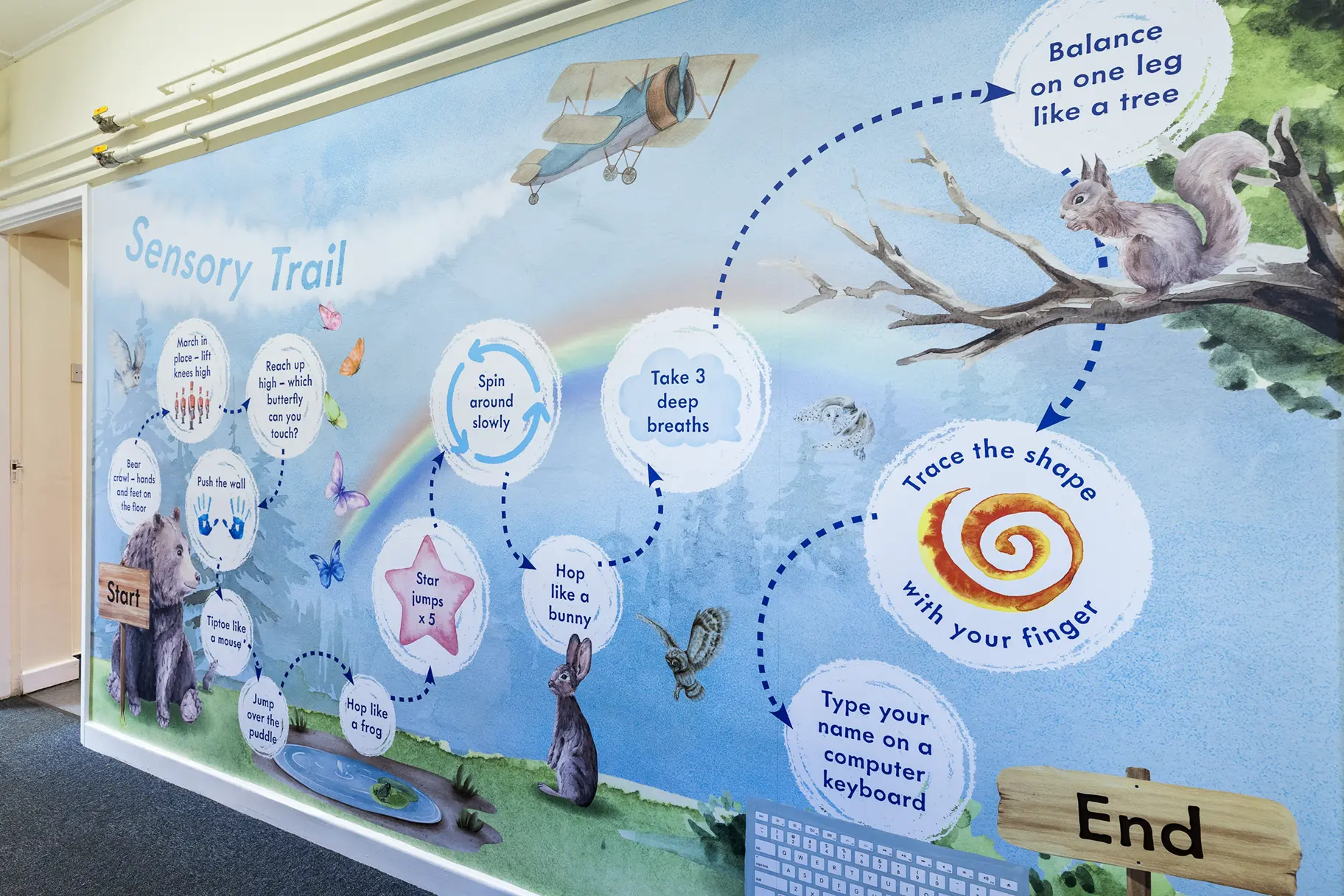
We are passionate about helping schools create visual environments that make a meaningful difference to the daily experiences of pupils. Purposefully, bespoke-designed spaces can help pupils feel calmer, safer, and more connected to their environment. And this can encourage them to attend, engage, and achieve their full potential. Importantly, nature-based design does not mean limiting creativity or colour. Nature itself is inherently diverse, sometimes calm and minimal, sometimes vibrant and immersive.
We design visual environments informed by how people psychologically and physiologically respond to nature. These principles guide every piece we create. This ensures that our work is not only beautiful, but purposeful.
In 2026, wellbeing in education has never been more important. Schools are navigating rising levels of anxiety, increasing behavioural needs, and growing awareness of the link between environment, mental health, and learning outcomes. Wellbeing is no longer a secondary consideration; it is central to attendance, engagement, and attainment. As expectations on both pupils and staff continue to increase, there is a clear need to design environments that actively support regulation, reduce stress, and create the conditions for learning to take place.
Looking at evidence-based approaches, such as the integration of nature, is not an added extra, it is a necessary evolution in how we think about educational spaces.
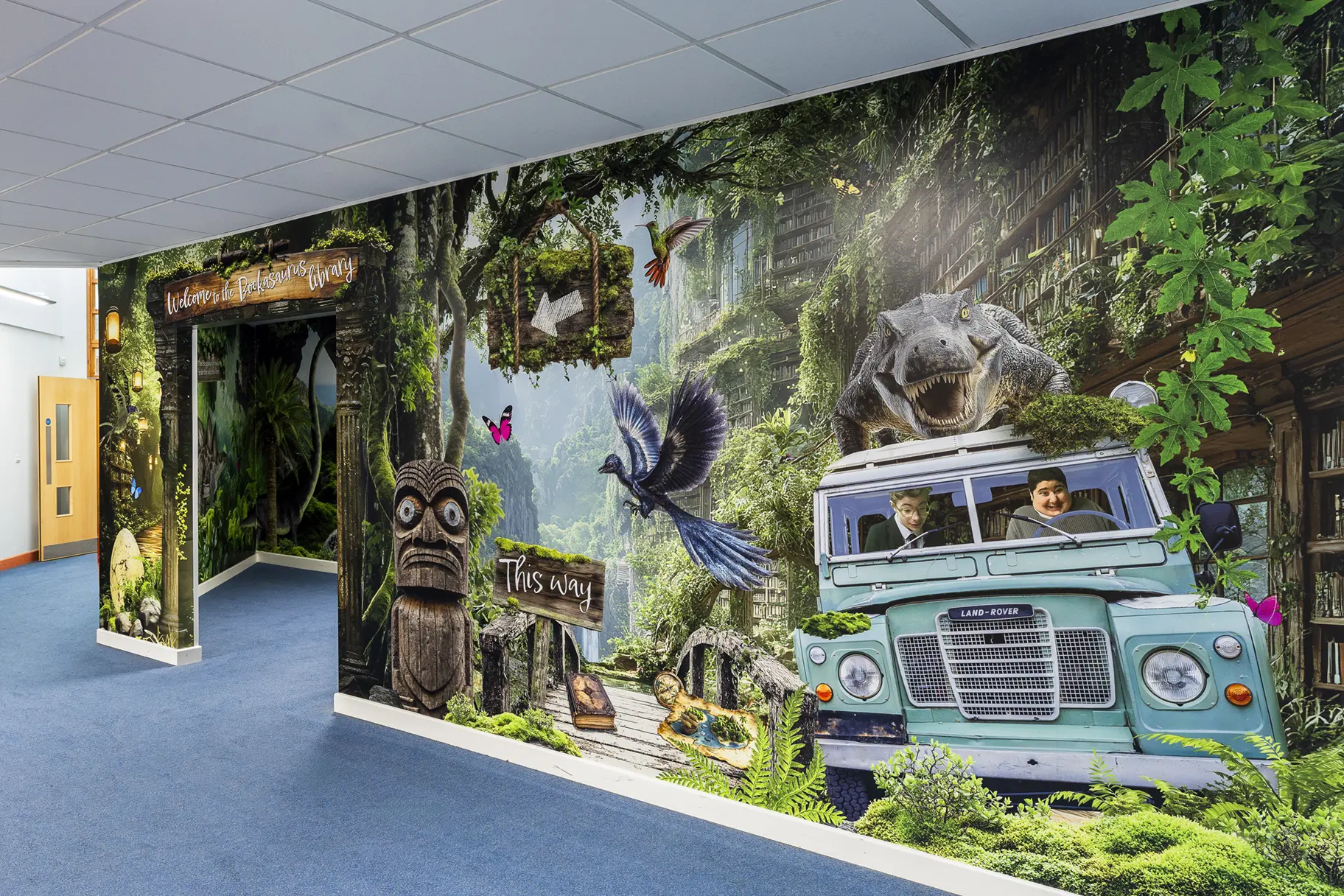
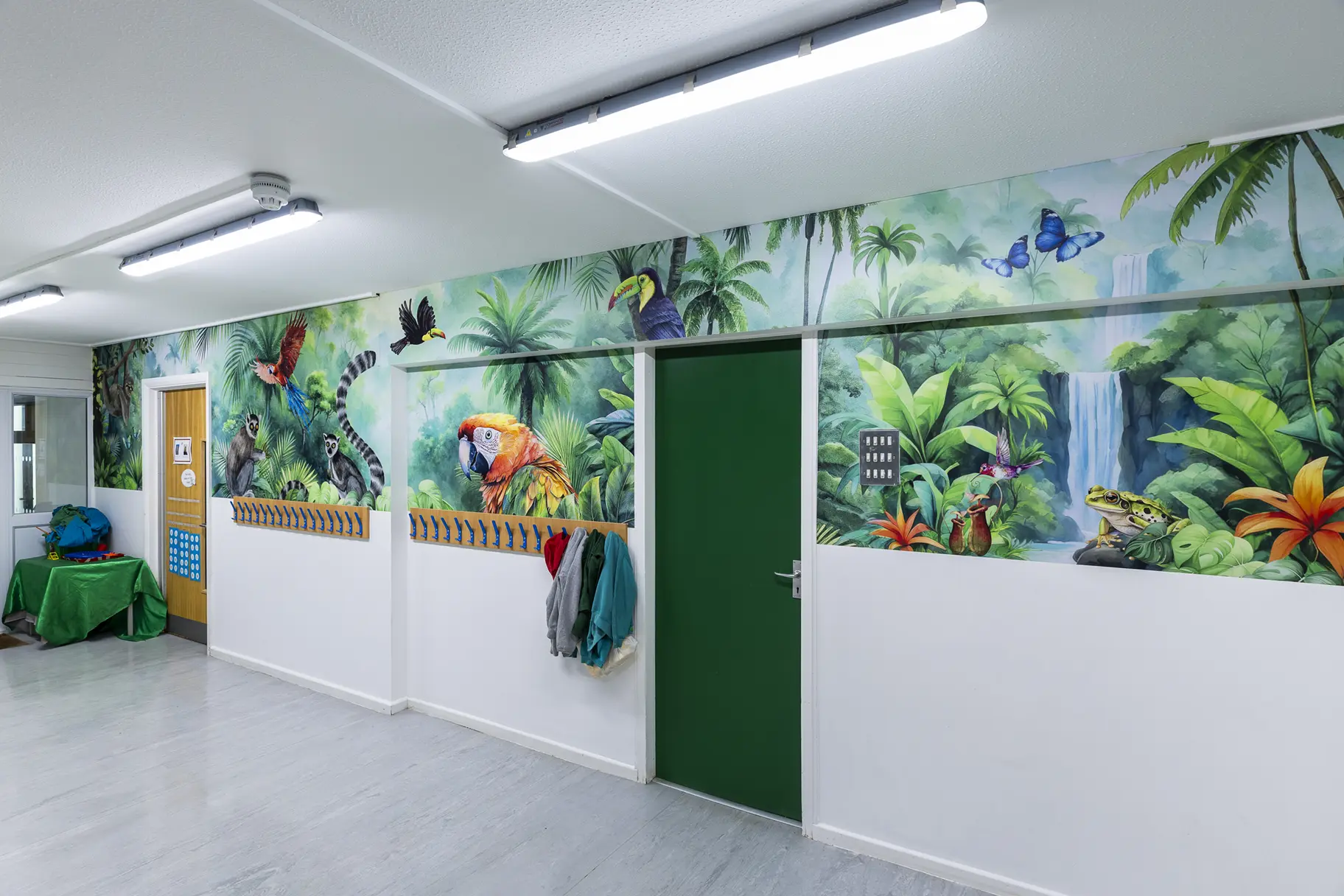
Importantly, nature-based design does not mean limiting creativity or colour. Nature itself is inherently diverse, sometimes calm and minimal, sometimes vibrant and immersive. Soft greens, browns, and neutral tones can evoke a sense of peace and quiet, supporting calm and regulation. Equally, rich, colourful environments, such as underwater scenes or rainforest landscapes, can create a sense of wonder, engagement, and positive stimulation. Designs with smaller, layered elements can support regulation through gentle visual engagement, offering a form of positive distraction that helps pupils self-regulate without overwhelming them
The key lies in balance and intention. We work closely with schools to find the right level of colour, detail, and stimulation for their specific pupils, spaces, and existing environments.
As modern life continues to distance us from the natural world, the role of design becomes increasingly significant. Schools are not just places of academic instruction; they are environments that shape wellbeing, behaviour, and long-term outcomes. By embedding nature into their visual landscape, we are not simply enhancing spaces, we are applying evidence-based design to support healthier, more resilient learners.
We’ll visit your school to understand your goals, explain our process and provide you with a no-obligation quote.