

or call 020 7404 3400

or call 020 7404 3400
Or call 020 7404 3400
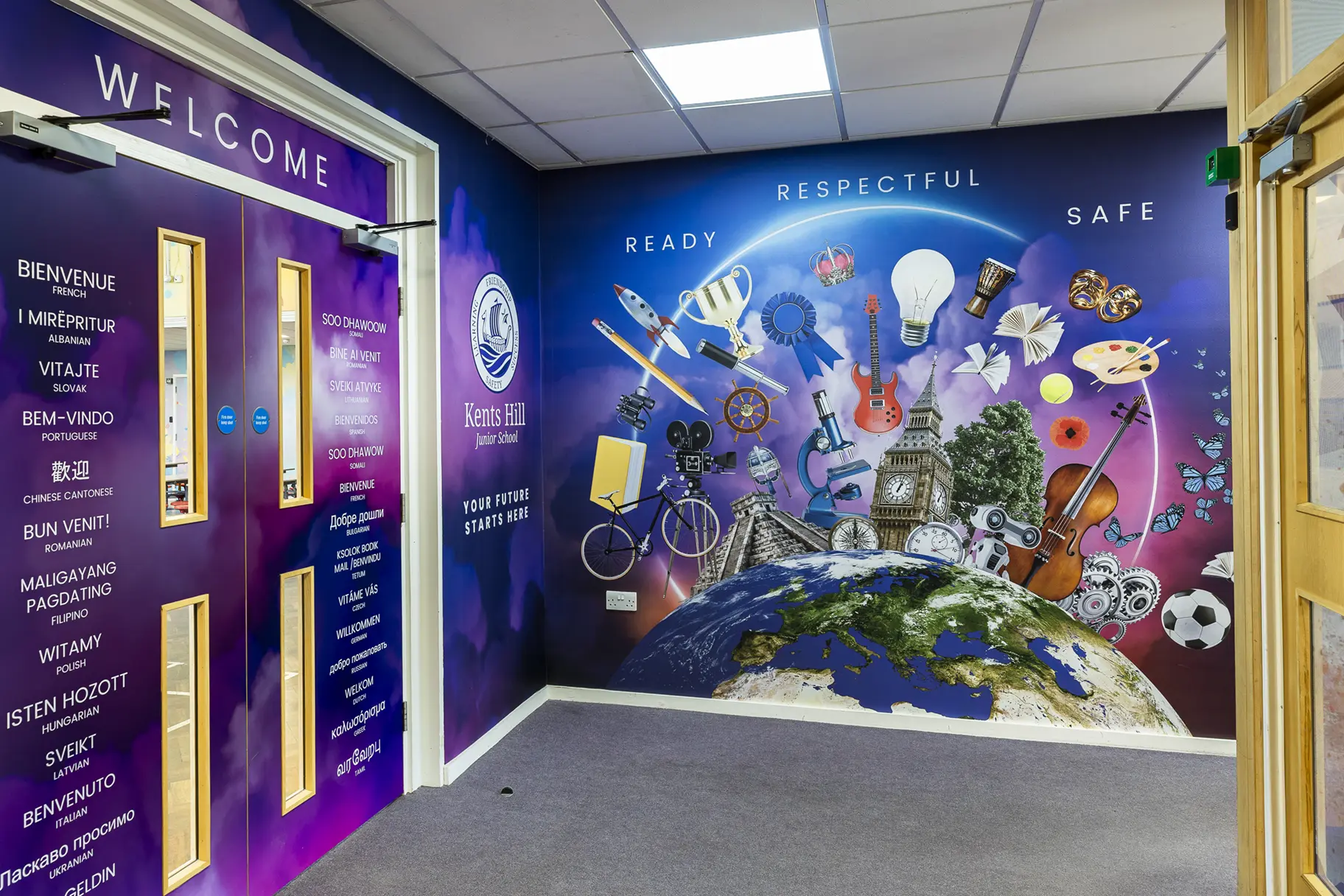
That’s why a single visual style can never meet every learner’s needs. Instead, schools benefit from visually intelligent environments. These use purposeful Wall Art to create different spaces for different purposes.
Because when you design visuals intentionally, you can calm, energise, guide, inspire, and support pupils exactly when they need it (Barrett et al., 2015).
Every child experiences their surroundings differently. Some are quickly overwhelmed by bright colours, busy patterns, or crowded displays. Others need stimulation, movement, and rich visual cues to stay engaged.
Research on learning environments shows that cluttered or overly intense visuals can disrupt focus. Yet, organised and intentional visuals improve motivation, memory, and conceptual understanding (Barrett et al., 2015; Brink et al., 2020). The key is not to eliminate visual stimulation, but to apply the right amount of stimulation to the right space.
Nurture bases, wellbeing rooms, or quiet corridors, low-stimulation visuals are powerful in sensory-supportive areas. Soft palettes, gentle patterns, and simple shapes help pupils regulate their emotions and settle their nervous systems (Ogita & Pothong, 2021).
So, Wall Art becomes a tool for grounding and comfort, helping children who are overstimulated reset before returning to learning.
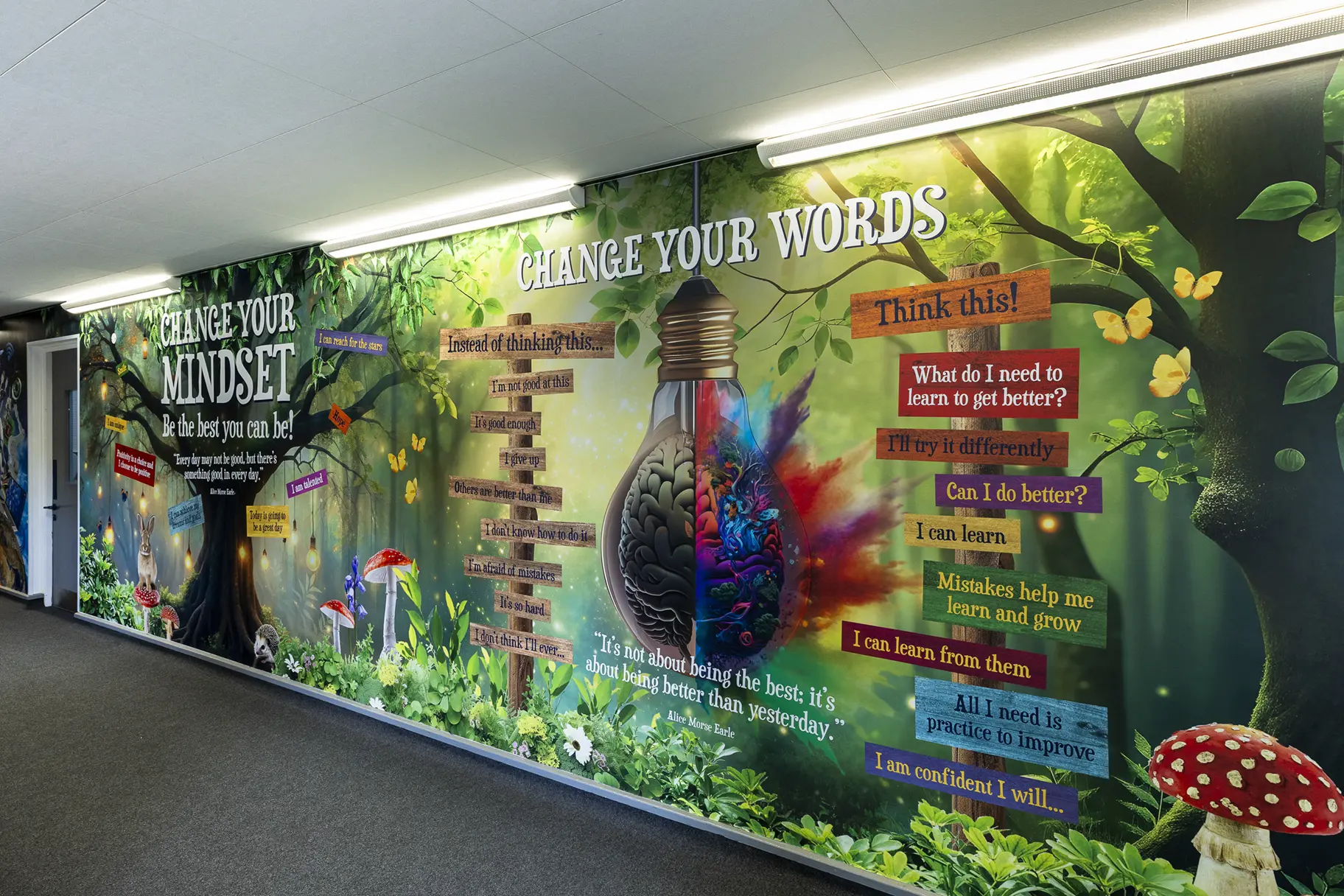
A visually intelligent school isn’t only calm. In fact, many areas should feel vibrant, stimulating, and energising. For younger learners, especially, bright and bold imagery supports cognitive development, curiosity, and imagination. Studies on colour psychology in education show that warm, uplifting colours can boost enthusiasm, while rich visual cues can anchor new knowledge (Al-Khabra, 2024).
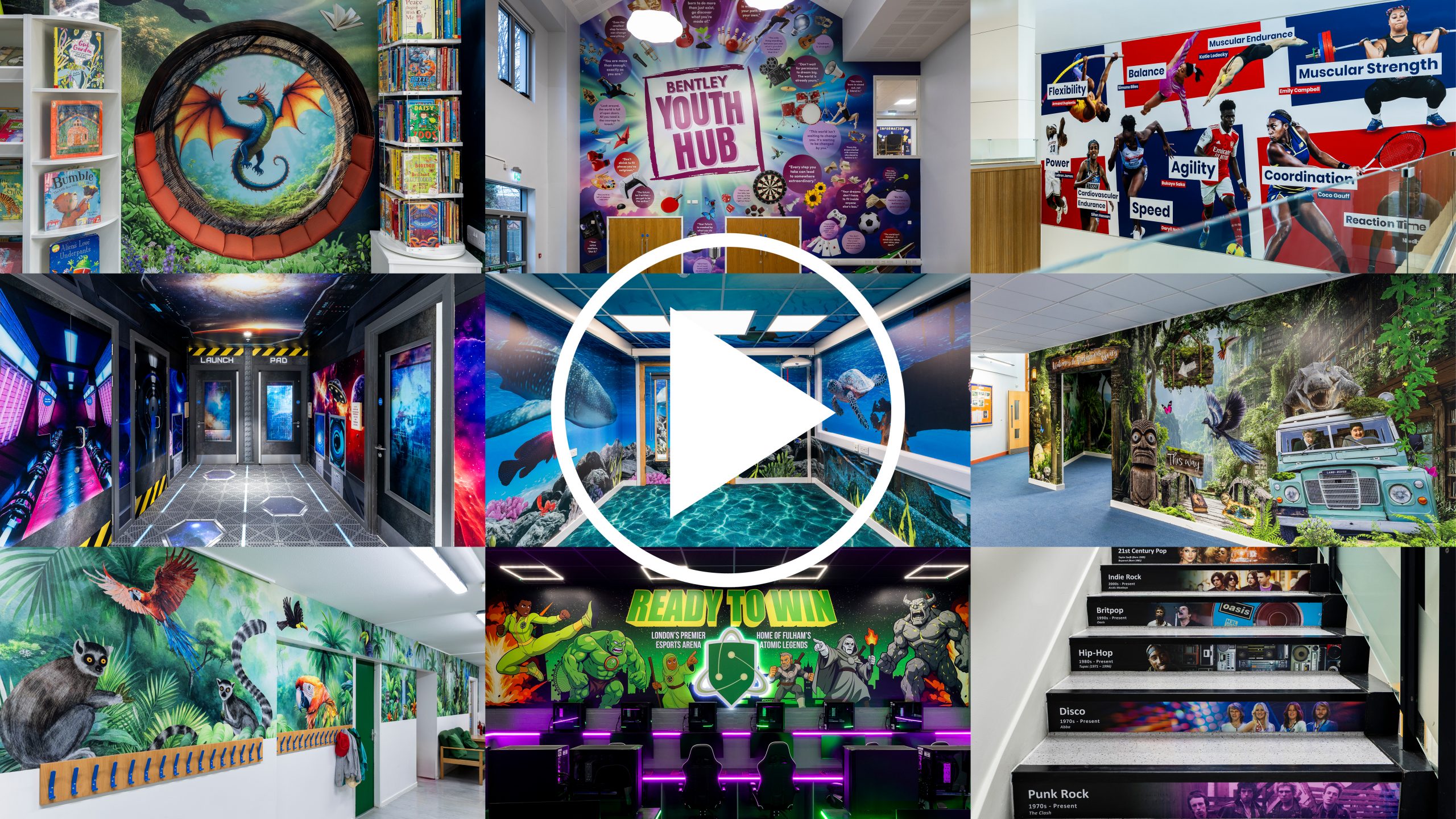
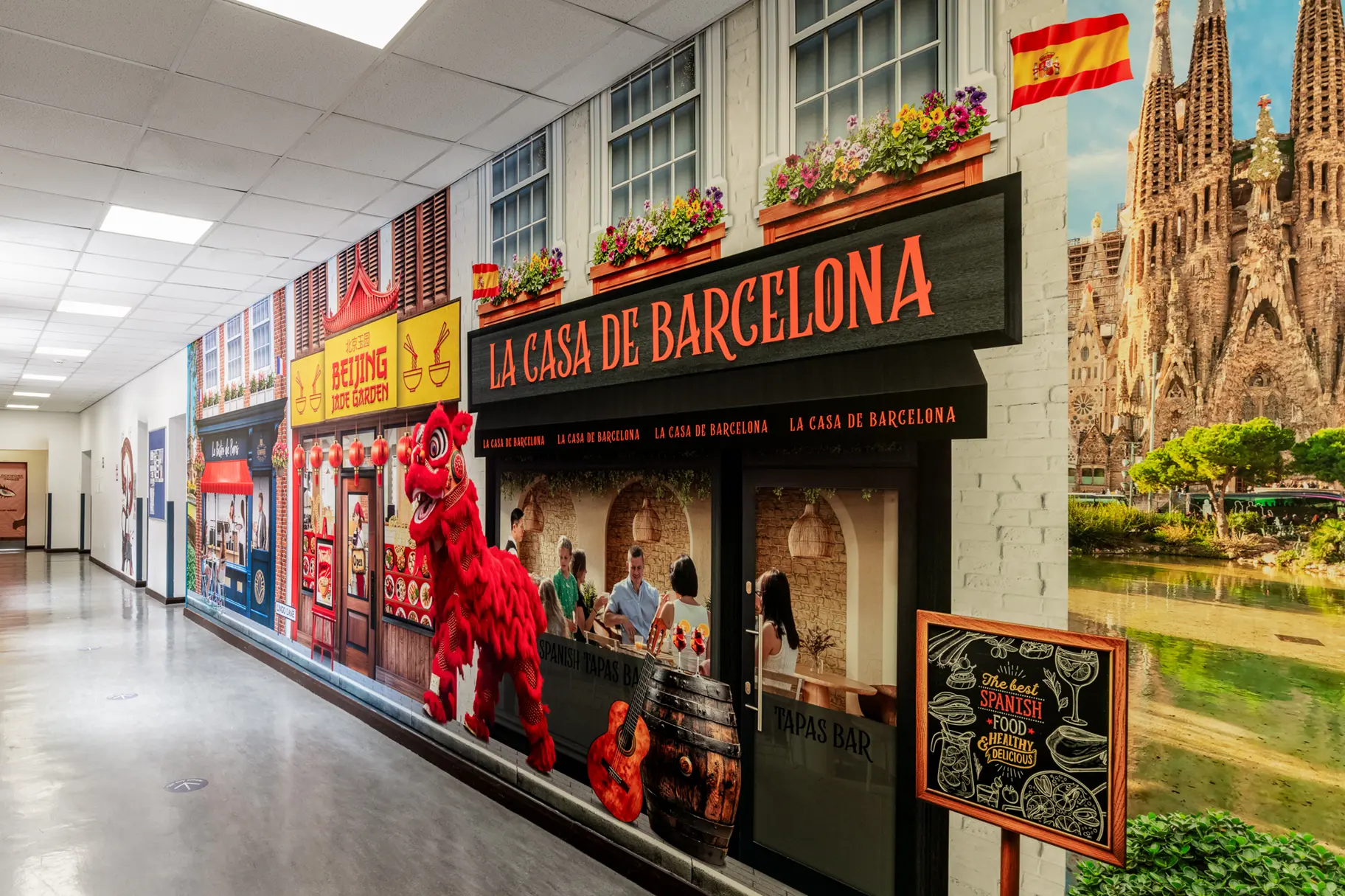
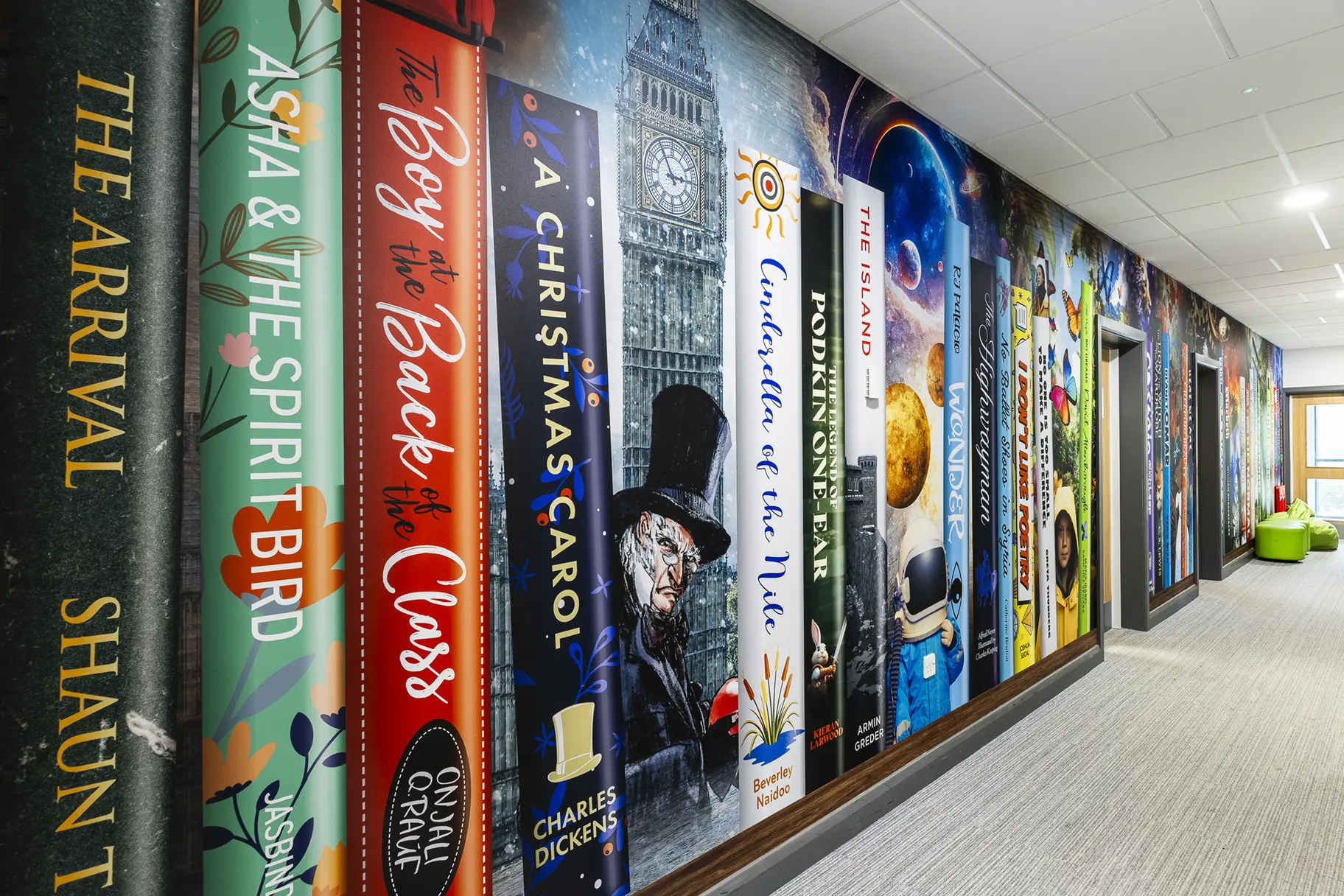
This is where immersive Wall Art shines. Thematic corridors, reading zones, science walls, history timelines, and outdoor learning graphics help bring learning to life. They act as “silent teachers,” providing repeated exposure to key ideas. This is known to strengthen recall and deepen understanding (Nolé et al., 2021). And, in these spaces, visual richness isn’t a distraction; it’s a learning advantage.
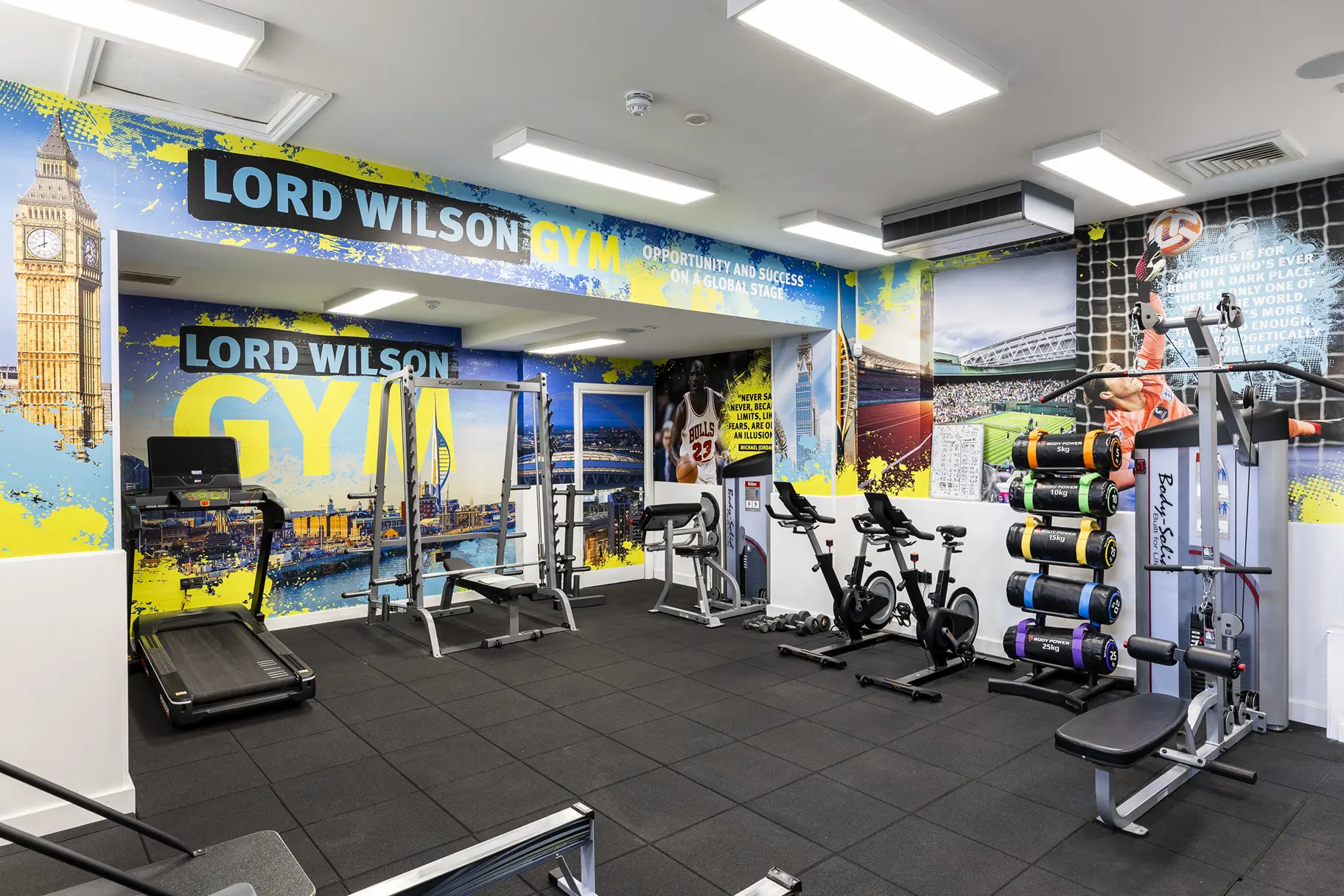
Schools also need high-impact areas that celebrate identity and community. Entrances, halls, and shared spaces benefit from strong branding, inspirational messaging, and storytelling. This helps pupils feel part of something bigger, building pride and belonging (Terblanche & Khumalo, 2024).
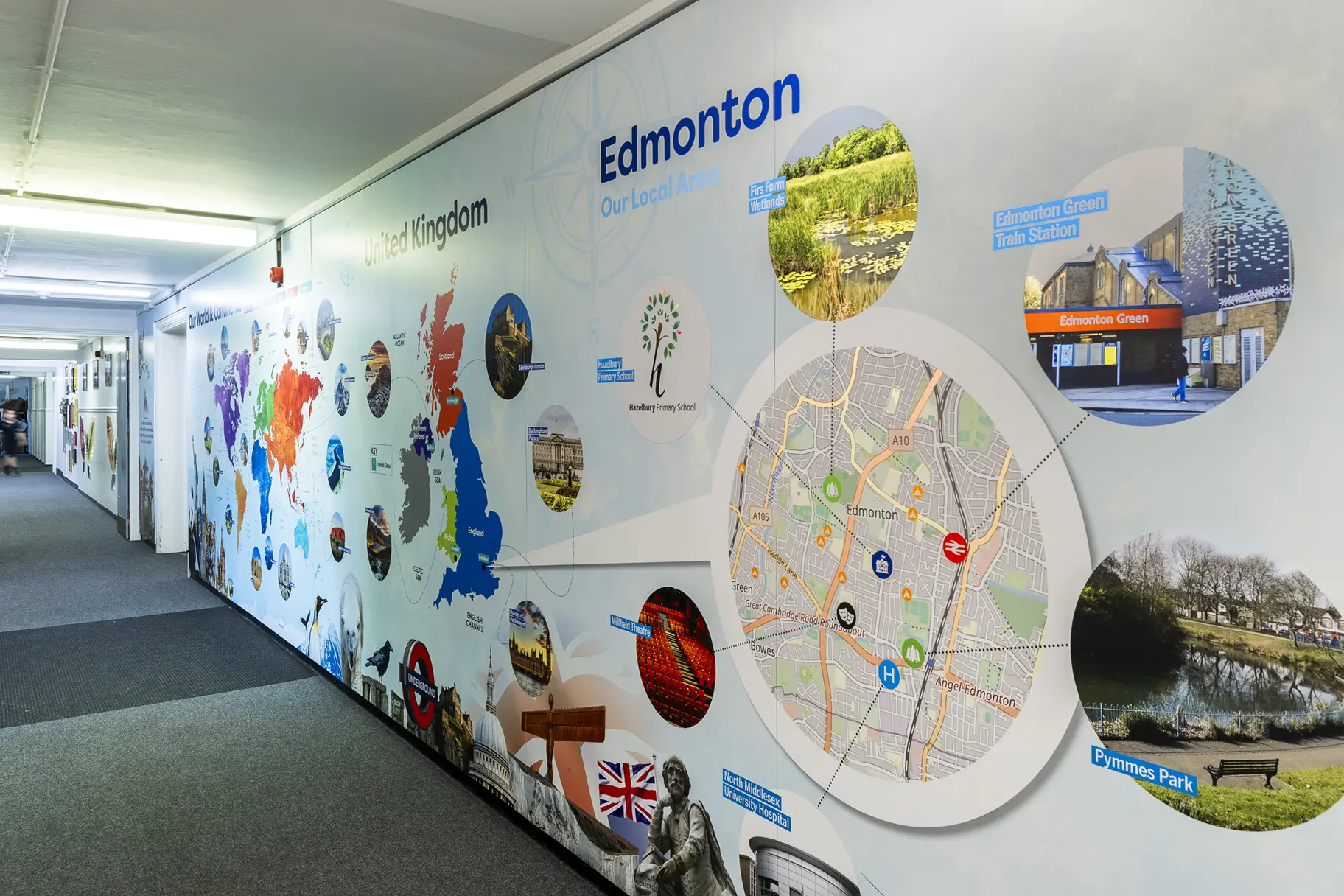
Children need different emotional tones at different moments. For example; calm for regulation, colour for joy, clarity for focus, immersion for imagination. By designing a variety of visual zones, schools can create a rhythm that supports the whole child.
Breakout spaces with warm, purposeful Wall Art give pupils a place to collaborate or reset.
Calm zones use muted design to offer quiet thinking. Creative areas thrive with bold colour, illustrations, and thematic graphics. And corridors, which are often overlooked, can become powerful learning journeys (Barrett et al., 2015).
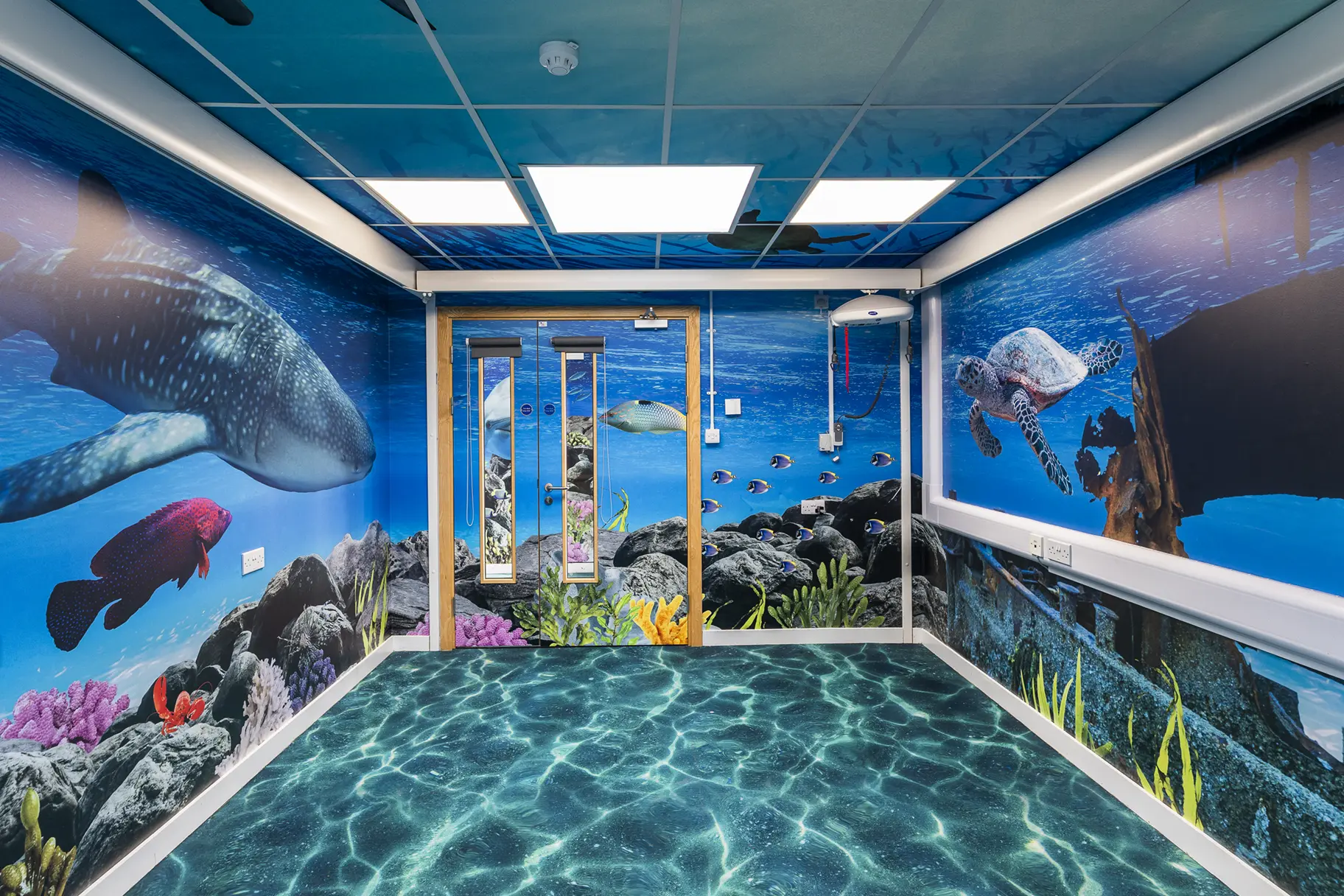
Wall Art is uniquely suited to shaping these shifts. It’s adaptable, affordable, and capable of transforming a space instantly without structural change.
Designing different spaces for different needs is not about choosing between calm and colourful. It’s about using visual design intelligently across the school to support learning, behaviour, and wellbeing. A well-designed visual environment meets pupils where they are, energising them, soothing them, guiding them, and inspiring them throughout the day (Barrett et al., 2015; Terblanche & Khumalo, 2024).
At Promote Your School, we specialise in creating purposeful visual environments that work together as a whole ecosystem. From sensory-supportive designs to bold immersive graphics, we help schools build spaces that truly support every learner.
Critically, we guide every school through our design process to ensure they fully understand how to maximise their available space for best effect. And, we offer a free and no obligation consultation to any school that is considering Wall Art, so we can get a deep understanding of what they wish to achieve.
Do get in touch to discuss your needs and goals, and find out how Wall Art can help you achieve them.
We’ll visit your school to understand your goals, explain our process and provide you with a no-obligation quote.